Travel
Korea in October (2026): Weather, What to Pack, and Why It's the Best Month
The payoff Guessing whether October means beach weather or winter coats, and whether the holidays will shut everything down → landing in the statistically driest, clearest month of the year with the right jacket packed, both long weekends dodged, and a hotel booked before Seoraksan's Oct 20–30 peak prices hit.
📈 Trend signal: korea in october / seoul in october (seasonal planning query — searches ramp Jul–Sep every year as fall trips get booked; pairs with our autumn-foliage pillar)
This guide contains affiliate links — if you book through them we may earn a small commission at no extra cost to you.
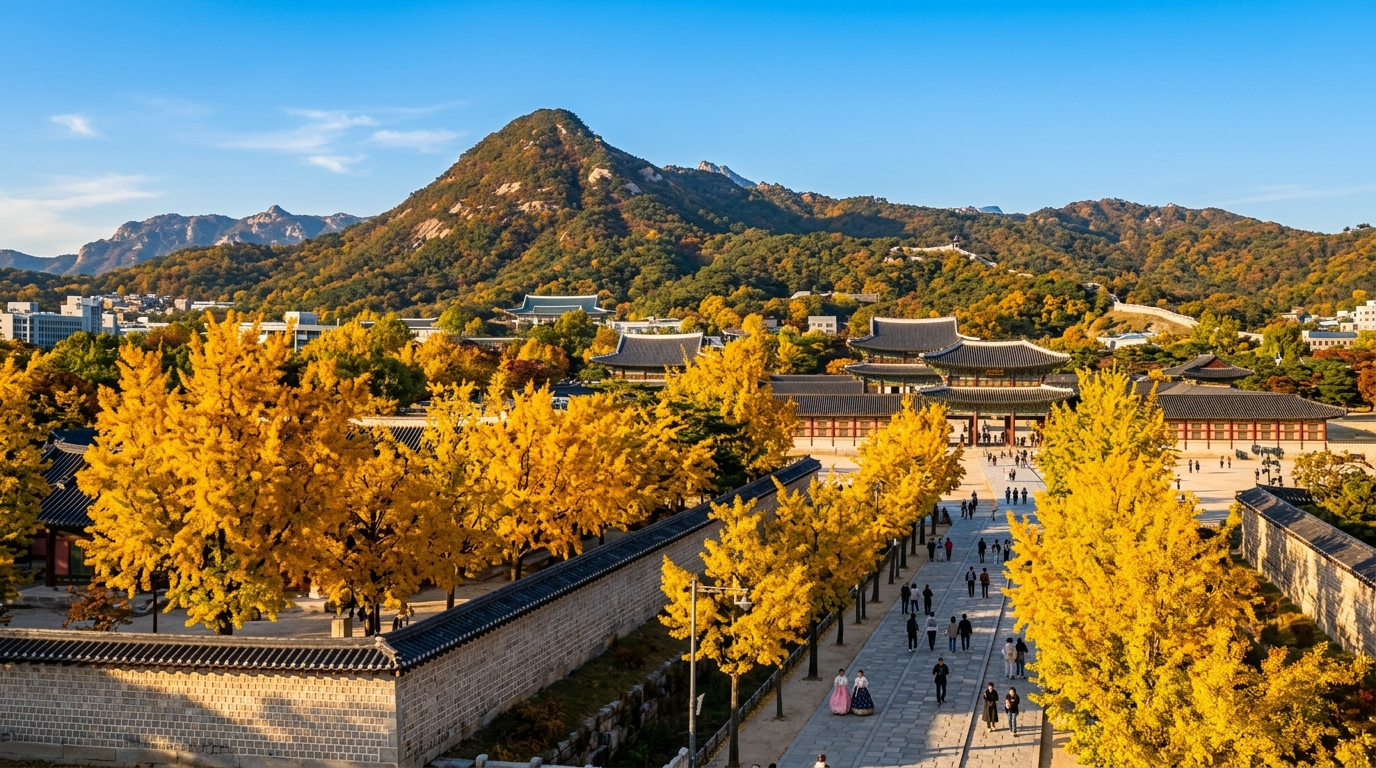
Ask anyone who actually lives here when you should visit Korea, and you’ll get the same answer with almost suspicious consistency: October. After five years in Seoul, I plan my own year around it. The monsoon is a memory, the typhoon window has slammed shut, humidity drops off a cliff, and the sky turns that deep, saturated blue Koreans have a whole phrase for — cheongo mabi (천고마비), “the sky is high and the horses grow fat.” It is, statistically and emotionally, the best month this country has.
But “October is great” isn’t a plan. In 2026, the month has two built-in long weekends that will jam trains and hotels, a foliage wave that moves north to south on a schedule, and — a detail most guides have wrong this year — neither of Korea’s famous fireworks festivals actually lands in October. Here’s the real calendar.
The weather, city by city
These are typical October averages (based on 1991–2020 climate normals; a warm or cold year can shift things a few degrees):
| City | Day high | Night low | Rain (month) | Rainy days |
|---|---|---|---|---|
| Seoul | ~20°C / 68°F | ~10°C / 50°F | ~50–65mm | ~5–6 |
| Busan | ~22°C / 72°F | ~15°C / 59°F | ~75mm | ~6 |
| Jeju | ~22°C / 72°F | ~15°C / 59°F | ~90mm | ~7 |
For context: Seoul gets hammered with 300mm+ in a peak summer month. October’s 50-something millimeters is a rounding error — you can plan outdoor days with real confidence. Humidity sits around 65–67%, and you get roughly seven hours of sunshine a day.
The catch is the daily swing. Early October afternoons can still touch 23–24°C while late-October dawns dip toward 5–8°C in Seoul. It’s genuinely two seasons in one day, which is why packing is all about layers.
And typhoons? By October the season is effectively done — the risk that shadows August and September drops to near zero. If you’ve been agonizing over storm season, we broke down the actual landfall math in our typhoon season guide — October is the payoff month that guide keeps pointing to. It’s also when Seoraksan peaks, roughly 18–25 October, and that park is the single hardest bed to find in the country.
What to pack (the short, honest list)
- Layers, not a coat. T-shirts or light long sleeves for daytime, plus a fleece, cardigan, or light knit for evenings. A packable light jacket or trench covers late-month mornings.
- One warmer layer if you’re chasing foliage. Seoraksan’s trails sit high and run 5–10°C colder than Seoul — bring a real windproof layer for mountain days.
- Comfortable walking shoes. October is the month you’ll log 20,000 steps without noticing. Skip brand-new shoes.
- A compact umbrella — five rainy days a month means you’ll probably meet one of them.
- Sunglasses and SPF. The famous clear skies are real; so is the UV.
- Skip: heavy parkas, rain boots, and (unless you’re hitting Busan’s beaches in the first week) swimwear.
The October 2026 calendar
Public holidays — two long weekends:
- Sat, Oct 3 — National Foundation Day (Gaecheonjeol). It falls on a Saturday in 2026, so Monday, Oct 5 becomes a substitute holiday → a three-day weekend, Oct 3–5.
- Fri, Oct 9 — Hangul Day. Falls on a Friday → another three-day weekend, Oct 9–11.
What this means for you: palaces, restaurants, and attractions stay open on both (these aren’t Chuseok-style shutdown holidays — banks and government offices close, tourism doesn’t), but KTX trains, highways, and resort-town hotels fill with domestic travelers. Book intercity trains for those weekends as early as you can. And good news: Chuseok itself falls September 24–26 in 2026, and it ends there — there is no substitute Monday. That surprises people, including me at first, because Oct 3 above does get one. The rule differs by holiday type: national days like Gaecheonjeol get a make-up day when they fall on a Saturday, but Chuseok and Lunar New Year only get one when a holiday day falls on a Sunday. So Sept 28 is a normal working day. Either way, October is completely clear of the big shutdown, unlike some years.
Festivals — with one correction most guides miss: the Seoul International Fireworks Festival, an October fixture for years, is confirmed for Saturday, September 5 in 2026, and the Busan Fireworks Festival for November 7. If a blog promises you Yeouido fireworks in October 2026, it’s recycling old information. What October does traditionally bring: the Jinju Namgang Lantern Festival (usually the first half of October — thousands of lanterns floating on a river, worth a detour), the Jarasum Jazz Festival in Gapyeong (typically mid-October), and the tail end of Andong’s mask dance festival. Confirm exact dates on official sites before building a day around them.
If Seoraksan is your target, the dedicated Seoraksan guide has the day-trip timetable and the cable-car trap.
Foliage timeline (north → south): first color hits Seoraksan’s peaks in late September; Seoraksan peaks around Oct 20–30; Seoul and the central region turn in late October and peak into early November; the south (Naejangsan, Busan) peaks in early–mid November. Full spot-by-spot dates and day-trip logistics are in our autumn foliage 2026 guide.
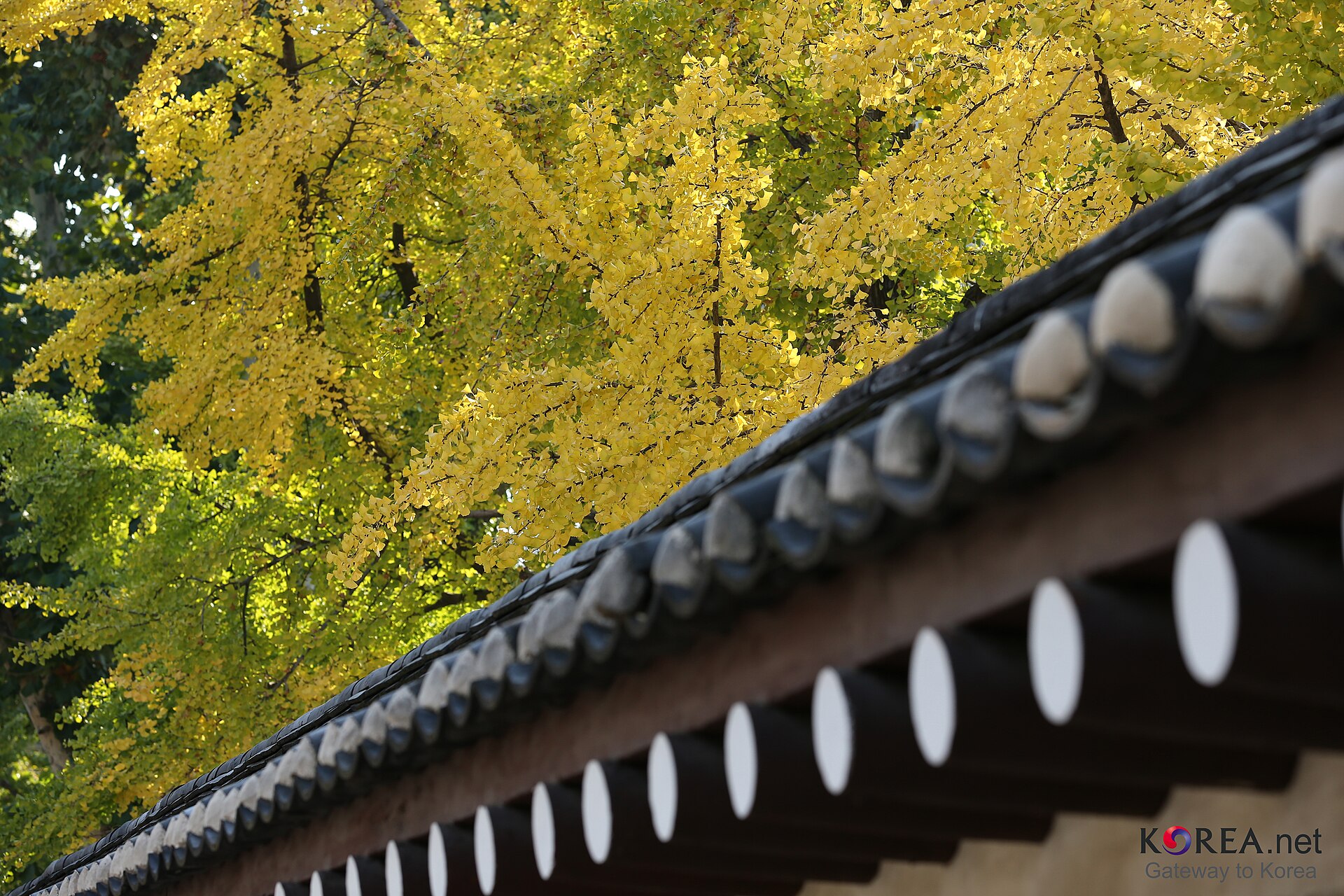
That photo is dated October 26 — which is exactly the point. Ginkgo is what turns Seoul gold rather than red, and inside the city walls it runs a week or two behind the mountains. If your trip is early October and you were counting on this, you’ll get green trees and blue skies; the gold belongs to the last week.
Which week should you come?
- Oct 1–10: The warmest window — Busan’s beaches are still pleasant, and city sightseeing is shirt-sleeve comfortable. The trade-off: both Korean long weekends land here. Fine if you book trains and hotels early; avoid moving cities on Oct 3–5 or 9–11 if you can. A 3-day Busan run shines in this window.
- Oct 11–20: My pick for most first-timers. No holidays, crowds exhale, weather still mild, and by the end of the window Seoraksan is lighting up. Best balance of comfort, price, and color.
- Oct 21–31: For foliage chasers. Seoraksan at full peak, Seoul’s ginkgo trees starting to turn gold, crisp 8°C mornings. Bring the warmer layer — and book Sokcho-area beds far ahead.
Book the bed before everyone else does
Here’s the stakes line, plainly: October is not a shoulder month in Korea — it’s domestic high season, stacked with visitors from Japan, Taiwan, and increasingly everywhere else, all aiming at the same three foliage weeks. Wait until late September to book and you’ll pay peak rates for whatever’s left, especially in Sokcho (the Seoraksan base) and central Seoul on the two long weekends.
Book your Seoul base 6–8 weeks out — our where to stay in Seoul guide breaks down which neighborhood fits which trip, and you can lock in a refundable rate on Booking.com now and adjust later. Refundable-now beats scrambling-later every time in October.
FAQ
Is October a good time to visit Korea?
It’s arguably the best month of the year: ~20°C days in Seoul, the lowest rain of the travel season, no typhoons, clear skies, and autumn foliage from mid-month. The only downsides are bigger crowds and higher hotel prices than true off-season.
Is Korea cold in October?
Not yet. Days are mild (18–23°C), but nights drop to 8–12°C in Seoul, especially late in the month. You need layers and a light jacket, not a winter coat — unless you’re hiking Seoraksan, where summit trails run much colder.
Can you see autumn leaves in Seoul in October?
Partially. Seoul’s color builds in the last week of October and peaks in early November. For guaranteed peak color within October, day-trip north to Seoraksan (peak roughly Oct 20–30) — details in our foliage guide.
Are there typhoons in Korea in October?
Almost never. Korea’s typhoon risk is concentrated in August and September; by October the season is effectively over. Statistically it’s one of the safest, driest months to plan around.
Is anything closed for the October 2026 holidays?
On National Foundation Day (Oct 3) and Hangul Day (Oct 9), banks, government offices, and post offices close, but palaces, museums, shops, and restaurants generally stay open. The real impact is crowding — trains and hotels fill for both three-day weekends, so book those legs early.
Photo credits, via Wikimedia Commons: Seoraksan autumn foliage by Joycekim77 (CC BY-SA 3.0); Gyeongbokgung ginkgo, 26 Oct 2012, by Jeon Han / Korea.net — Korean Culture and Information Service (CC BY-SA 2.0).

.jpg)
Planning Your Korea Trip? Don't Pay Full Price! ✨
Save $20–$50 per person with our verified reader perks & skip the long ticket booth queues:
AREX Incheon ↔ Seoul Express
Non-stop 43-min direct train with guaranteed reserved seats & free Wi-Fi. Scan your mobile QR straight at the gate!
Get 20% Off AREX Ticket →Korea Unlimited 5G eSIM
Skip the 30-min airport counter line. Scan the QR code to connect instantly for smooth Naver Maps navigation.
Compare Korea eSIM Options →WOWPASS Card (Pay + T-Money)
Pay anywhere in Korea with zero FX fees + subway card. Use code KOREAEASY for 0.5% cash top-up bonus!
Top Seoul Passes & Day Tours
Guaranteed entry for Lotte World, Nami Island tours, CIMER Spa, and Hanbok palace rentals with instant mobile vouchers.
Browse Top Seoul Deals →Sources
- https://www.weathermonth.com/en/seoul-weather-in-october
- https://www.weathermonth.com/en/busan-weather-in-october
- https://www.officeholidays.com/calendars/planners/south-korea/2026
- https://en.wikipedia.org/wiki/National_Foundation_Day_(Korea)
- https://www.waug.com/en/magazines/2440
- https://busanfireworks.com/en/
- https://korea-insider.com/korea-autumn-foliage-2026/
Search-trend data from Google Trends (KR) and Naver DataLab. This article is independent commentary and is not affiliated with any broadcaster, agency, or the individuals mentioned.
Korea's Coin Laundromats: Foreign Card Failures, Detergent Dispensers & the Change Machine Trap
Incheon Airport Tax Refund: Customs Inspection vs. Cash Kiosk — The Walkthrough Most Guides Get Wrong