Travel
Seoraksan Autumn Foliage 2026: Peak Dates, and the 6 a.m. Bus That Makes a Seoul Day Trip Work
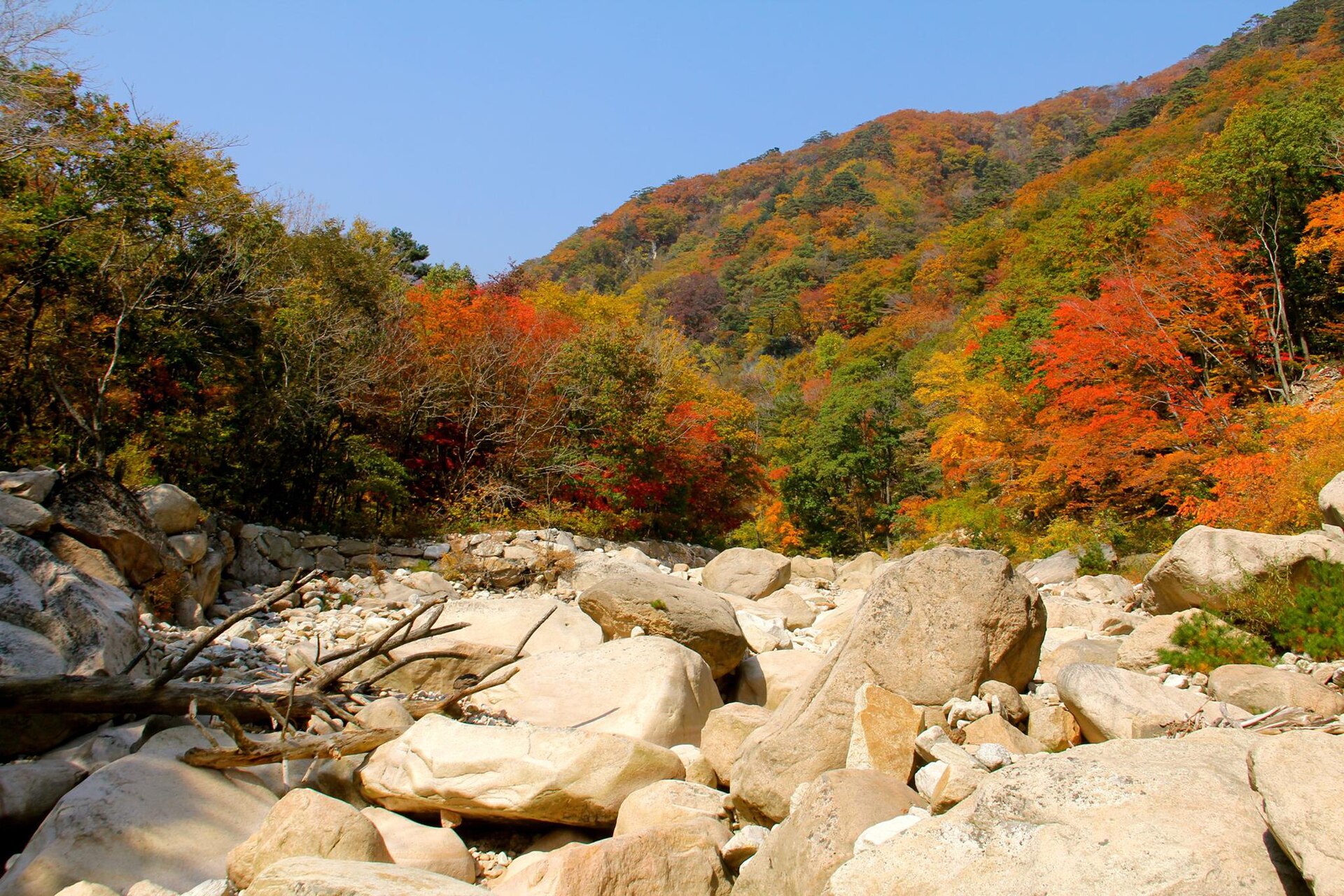
The payoff Landing in Seoul in late October knowing the leaves are peaking somewhere but not which day, which bus, or whether the famous cable car is worth it → standing under red maple at the Seorak valley floor by 9:30 a.m. on a Tuesday in the Oct 20–30 window, back in Seoul for dinner, having skipped the two-hour queue entirely.
📈 Trend signal: Seoraksan / 설악산 단풍 — foliage-planning searches ramp from late July; 'korea autumn foliage forecast 2026' is currently the query this site ranks #1 for, three months before the leaves turn
This guide contains affiliate links — if you book through them we may earn a small commission at no extra cost to you.
Every autumn there’s a week when Korean coworkers stop pretending to work and start refreshing a map. Not a weather map — a danpung map, the leaf-color one, and the first place it goes red is always the same: Seoraksan, up in the northeast corner where the mountains fall straight into the East Sea. It’s the country’s showpiece park, it turns before anywhere else on the mainland, and roughly 51 million Koreans know both of those facts. That’s the whole problem with visiting it.
So this isn’t a “top 10 things to see at Seoraksan” post. This is the logistics: the dates, the 2.5-hour bus that most guides describe vaguely, the cable car queue that quietly eats half your day, and the honest answer to whether a Seoul day trip is worth it or whether you should just sleep in Sokcho.
One note on why we’re this early: foliage planning demand starts long before the leaves do. Search interest in Korean autumn color climbs from late July onward, and right now — in August — the single query this site ranks highest for is “korea autumn foliage forecast 2026.” People are booking this in summer. If you’re reading in October, you’re already fighting for whatever’s left.
When Seoraksan actually peaks in 2026
Korean foliage doesn’t sweep across the country; it comes down mountains and then rolls south. Seoraksan does both at once, which is why “when does it peak” has three different right answers depending on where on the mountain you’re standing.
| Where on the mountain | Elevation | When it turns |
|---|---|---|
| Daecheongbong summit and high ridges | ~1,708m | First tinting early October |
| Mid-slopes, Ulsanbawi and Gwongeumseong viewpoints | 700–900m | Roughly Oct 15–25 |
| Valley floor: Sogongwon entrance, Sinheungsa, Biseondae | 200–400m | Full peak roughly Oct 20–30 |
For nearly everyone reading this — people arriving by bus, walking the valley, riding the cable car — the window is the last third of October. That matches the timeline in our Korea autumn foliage 2026 pillar guide, which tracks the same wave down the peninsula to Seoul (late Oct–early Nov) and finally Naejangsan (early November).
Two honest caveats. First, the Korea Meteorological Administration and the private forecasters don’t publish official 2026 foliage lines until early September — the dates above come from historical patterns, and warm late summers have been nudging peak later year on year. Recheck in September. Second, October is the one month you don’t have to weigh storm risk: Korea’s typhoon season is functionally over by then, which we walked through in the typhoon season guide. Late October is about as reliable as outdoor planning in Asia gets.
The day trip from Seoul, hour by hour
There is no KTX to Sokcho. The east-west rail line has been under construction for years and isn’t running yet, so the bus is the trip — and it’s a genuinely good bus, because the Seoul–Yangyang expressway tunnels straight through the mountains.
Route: Dong Seoul Bus Terminal (동서울터미널 — right at Gangbyeon Station, Line 2, so it’s a subway ride from anywhere central) → Sokcho Express Bus Terminal. Buses also run from the Express Bus Terminal in Gangnam if that’s closer to your hotel.
- Journey time: about 2 hours 20 minutes to 2 hours 40 minutes in normal traffic.
- Fare: roughly ₩19,000–28,000 one way, depending on whether you take a standard seat or udeung (우등, premium — three wide seats per row, worth it on a 2.5-hour ride).
- Frequency: the Dong Seoul–Sokcho intercity route runs about 34 departures a day, with the first at 06:05 and the last at 21:00 — that density is exactly why a day trip works here and doesn’t at most Korean mountains.
- Book on: Bustago (bustago.or.kr) or TXBus — both take foreign cards inconsistently, so many travelers just buy at the counter. On peak foliage weekends, don’t do that. Buy days ahead.
⚠️ Departure counts and first/last times above are current; fares I could not verify for 2026 and Korean bus fares get revised most years. Treat the won figures as the shape of the trip, not a quote — the booking site shows the real number at checkout.
From Sokcho terminal to the park: local city buses 7 and 7-1 run to Seoraksan-dong / Sogongwon, the main park entrance, in roughly 25–40 minutes for about ₩1,500–1,700 (T-money card or cash). A taxi is 15–20 minutes and typically ₩16,000–20,000. In peak foliage weeks the road to the entrance jams, and the bus sits in the same jam the taxi does — so on those days the bus wins on price and ties on time.
A realistic weekday day trip looks like this:
| Time | What’s happening |
|---|---|
| 06:10 | Leave Dong Seoul |
| ~08:40 | Arrive Sokcho terminal, grab a coffee |
| 09:20 | Bus 7 to Sogongwon park entrance |
| 09:40–13:00 | Cable car or Biseondae valley walk |
| 13:30 | Late lunch in Sokcho — the tourist fish market is the move |
| 16:30–18:00 | Bus back to Seoul |
| ~19:00–20:30 | Dinner in Seoul |
That works. What doesn’t work is the 9 a.m. bus, which puts you at the park entrance around 12:30 with everyone else in Korea.
One thing almost every older guide gets wrong: you don’t pay to enter. National park entrance fees were scrapped in 2007, and the ₩3,500 “cultural property” fee that Sinheungsa temple collected at the Seoraksan gate — the one that made foreigners furious for a decade, because you paid it whether or not you visited the temple — was abolished in May 2023 along with the same fee at dozens of other Korean temples. If a blog tells you to bring ₩3,500 in cash for the gate, it hasn’t been updated in three years. (Drivers still pay parking, around ₩5,000.)
The cable car problem
The Gwongeumseong cable car is the reason most day-trippers come: a few minutes up to a ridge fortress site with a big open view over the granite spires and, in late October, valleys full of red. Round trip is ₩16,000 for adults (₩12,000 children).
The ticket is not the cost. The queue is — and here’s the part that catches people out: there is no advance booking at all. Because the cable car stops running whenever the mountain weather turns, the operator sells same-day only, at the counter. You cannot lock a slot from your hotel the night before, and no third-party site can sell you one either.
That single rule is what makes the queue brutal in foliage season. Tickets are issued for timed departures, so on a peak-season weekend the whole day’s slots can be gone by mid-morning, leaving you holding a boarding time three hours out. Waits of an hour-plus are routine in the October window.
My rule: arrive before 9:30 or don’t plan on it. If you get there at noon on an October Saturday, buy nothing, walk the valley instead, and spend the saved two hours in Sokcho. The valley floor is where the maple actually is — the ridge gives you the panorama, not the close-up color.
(There’s also a second, separate cable car project on the park’s western Osaek side that’s been in and out of the news for years. Confirm whether it’s operating before you build a plan around it — I couldn’t verify its 2026 status.)
If you skip the cable car: three walks, by effort
- Biseondae (비선대) — about 2.3km each way on a flat, paved-to-gravel valley path along a stream, one hour round trip at a stroll. This is the one I’d send parents, kids, or anyone in normal shoes on. Best foliage-per-effort ratio in the park.
- Heundeulbawi (흔들바위, “rocking rock”) — roughly 2.9km one way, moderate, 2.5–3 hours round trip. A famous boulder that visitors push on; the walk up through the maple is the real reward.
- Ulsanbawi (울산바위) — about 3.8km one way, four hours round trip, ending in a long staircase bolted to the rock face (locals will tell you it’s 808 steps). Big legs required, enormous view. Doable on a day trip only if you’re on that 6 a.m. bus.
Daecheongbong, the 1,708m summit, is a 12-hour-plus undertaking. That’s an overnight, not a day trip.
Seoraksan vs Nami Island vs Naejangsan
Which one you should go to depends almost entirely on your travel dates. This is the table I wish someone had handed me:
| Seoraksan | Nami Island | Naejangsan | |
|---|---|---|---|
| Peak 2026 | Oct 20–30 | Oct 25 – Nov 1 | Nov 1–8 |
| From Seoul | ~2.5 hr bus each way | ~40 min ITX from Cheongnyangni + shuttle + ferry | ~3.5–4 hr (KTX + local bus) |
| Effort | Medium–high (real mountain) | Very low (flat, paved lanes) | Low–medium |
| Admission | Free | ₩19,000 incl. round-trip ferry | Park free |
| Best for | Dramatic alpine color, hikers | First-timers, families, short trips | Late-season travelers, the maple tunnel |
| Day trip? | Yes, on a weekday, starting early | Easily | Long but possible |
Short version: arriving mid-to-late October, go north to Seoraksan. Arriving in November, go south to Naejangsan. Nami Island fits any of it — and if that’s your pick, we costed it to the last thousand won in Nami Island: DIY vs tour. For the full month’s context — weather, the two long weekends that jam every train — see Korea in October.
Weekday versus weekend is not a small difference
Seoraksan in the last week of October is a domestic-tourism event. Korean travelers, tour buses from every province, and increasingly visitors from Japan and Taiwan all aim at the same ten days.
The three things that actually change your day:
- Go Tuesday–Thursday. Same color, maybe a third of the people. This single choice beats every other tip here.
- Take the first bus. Not for the light — for the cable car queue and the entrance road.
- Don’t come back on Sunday afternoon. The Seoul-bound expressway on an autumn Sunday can turn 2.5 hours into four or more. Come back Sunday morning, or leave after 8 p.m., or stay the night.
Which brings up the real question: should you day-trip at all? If your dates are flexible, one night in Sokcho is the better trip. You get a dawn start at the park with nobody in it, the seafood town in the evening, and no return-traffic gamble. Sokcho’s room stock is small and it’s the first town in Korea to sell out for foliage season — by late September, in a normal year, the good places are gone.
👉 Check Sokcho hotel availability for your October dates on Booking.com — filter for free cancellation, lock the dates now, and adjust once the September forecast lands. Waiting until October means paying peak rate for whatever nobody else wanted.
If you’d rather not deal with buses at all, guided Seoraksan day trips from Seoul do exist and typically bundle the transport, the cable car, and often Naksansa temple or the coast. They’re a fair deal for a solo traveler who doesn’t want to time-manage a queue, and a poor one if you’re a group of four who’d rather move at your own speed.
👉 Compare Seoraksan day tours from Seoul on Klook or on GetYourGuide — autumn weekend departures are the first to fill.
One practical note before you go: you’ll be checking bus times, cable car status, and a trail map on your phone all day, and Google Maps can’t route you in Korea. Sort a data plan before you land — our Korea eSIM guide covers which one to buy.
FAQ
When exactly should I go to Seoraksan for autumn colors in 2026?
For the valley areas most visitors see — the Sogongwon entrance, Sinheungsa, Biseondae, the cable car base — target October 20–30. If you specifically want the high ridgelines in color, come around Oct 18–25. The summit starts turning in the first days of October but requires a serious hike. Official forecasts land in early September; recheck then, since recent warm autumns have pushed peaks a few days later.
Is Seoraksan worth a day trip from Seoul, or should I stay overnight?
A day trip is genuinely doable — 2.5 hours each way, with a 6 a.m.-hour departure from Dong Seoul giving you a solid four hours in the park. But it only works on a weekday. On a peak-season weekend, the cable car queue and the Sunday return traffic will beat you. If your dates allow one night in Sokcho, take it: you get an empty park at opening time and the town’s seafood market in the evening.
How much does the Seoraksan cable car cost, and how long is the wait?
Around ₩16,000 round trip for an adult. The wait is the real variable: tickets are sold for timed slots, and in peak foliage weeks they can be gone by mid-morning, with waits routinely running past an hour. Arrive before 9:30 a.m. or plan to walk instead — the valley trails have better close-up color anyway.
Do I have to pay to enter Seoraksan National Park?
No. Park entrance fees ended in 2007, and the ₩3,500 temple cultural-property fee at the Seoraksan gate was abolished in May 2023. Entry is free. Only drivers pay, for parking (around ₩5,000). Older guides still list the temple fee — ignore them.
Photo credit, via Wikimedia Commons: Seoraksan autumn foliage by Joycekim77, CC BY-SA 3.0.

Planning Your Korea Trip? Don't Pay Full Price! ✨
Save $20–$50 per person with our verified reader perks & skip the long ticket booth queues:
AREX Incheon ↔ Seoul Express
Non-stop 43-min direct train with guaranteed reserved seats & free Wi-Fi. Scan your mobile QR straight at the gate!
Get 20% Off AREX Ticket →Korea Unlimited 5G eSIM
Skip the 30-min airport counter line. Scan the QR code to connect instantly for smooth Naver Maps navigation.
Compare Korea eSIM Options →WOWPASS Card (Pay + T-Money)
Pay anywhere in Korea with zero FX fees + subway card. Use code KOREAEASY for 0.5% cash top-up bonus!
Top Seoul Passes & Day Tours
Guaranteed entry for Lotte World, Nami Island tours, CIMER Spa, and Hanbok palace rentals with instant mobile vouchers.
Browse Top Seoul Deals →Sources
- https://english.knps.or.kr/
- https://www.sorakcablecar.co.kr/
- https://www.bustago.or.kr/
- https://txbus.t-money.co.kr/
- https://www.sokcho.go.kr/
- https://english.visitkorea.or.kr/
Search-trend data from Google Trends (KR) and Naver DataLab. This article is independent commentary and is not affiliated with any broadcaster, agency, or the individuals mentioned.
Renting a Car in Korea: 1949 vs 1968 IDP Rules, Self-Service Gas Stations & the Hi-Pass Toll Lane Trap
Korea's Coin Laundromats: Foreign Card Failures, Detergent Dispensers & the Change Machine Trap