Travel
3 Days in Busan for Under $550: The First-Timer's Itinerary (2026)
The payoff Defaulting to another Seoul-only trip because Busan felt like a logistics puzzle → three days of Gamcheon, the Haeundae–Gwangalli beaches and Haedong Yonggungsa mapped hour-by-hour, all in for under $550.
📈 Trend signal: Busan travel (Naver DataLab: Busan index 100 vs Seoul ~70; Jan peak 84.7)
This guide contains affiliate links — if you book through them we may earn a small commission at no extra cost to you.
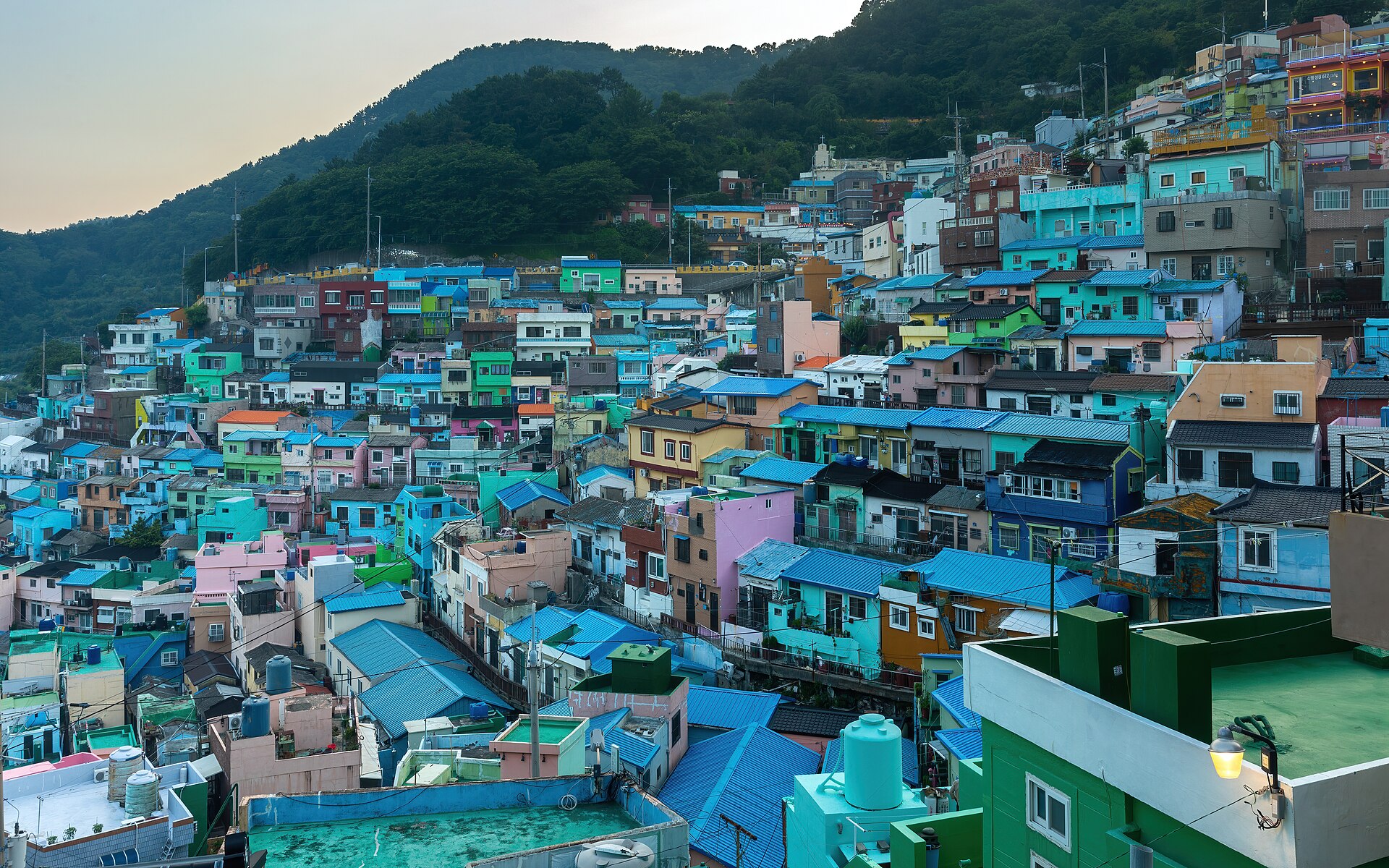
Gamcheon Culture Village, Busan. Photo by Basile Morin via Wikimedia Commons, CC BY-SA 4.0.
Most first-time visitors to Korea book Seoul and stop there. Koreans themselves don’t. When we look at search trends inside Korea, Busan consistently out-searches Seoul across all twelve months of the year—it is the country’s undisputed domestic vacation capital.
Here is the tested, hour-by-hour plan I recommend if you have three days and it’s your first visit—covering real transit routes, realistic timings, and a full budget breakdown in USD.
✈️ Planning your own trip? Send me your itinerary and get a written review from a Seoul resident — Seoul Trip Check, US$19, English reply within 48 hours.
Setting Up Your Busan Base
Before diving into the day-by-day route, two practical decisions shape the whole experience:
- Getting there from Seoul: Take the KTX bullet train from Seoul Station to Busan Station (~2h 30m, ~₩60,000 / ~$44 each way). It drops you right in the city center, steps from Metro Line 1.
- Where to sleep: For a first 3-day trip, stay in Haeundae for relaxed beach mornings and easy access to the coastal monorail, or choose Seomyeon if you want central transit connections and cheaper late-night food.
👉 For our complete breakdown on KTX booking, rail passes vs point-to-point tickets, bus options, and a head-to-head hotel price comparison, read our Busan Travel Guide for First-Timers and our Haeundae vs Gwangalli district comparison.
Day 1 — Gamcheon, Jagalchi, BIFF Square
Ease in on the west side, all reachable by metro.
- Morning: Gamcheon Culture Village. A hillside of pastel houses stacked like a Lego set, threaded with murals and tiny galleries. Take Metro Line 1 to Toseong Station, then the local village bus (or a short taxi) up the hill. Go early — by late morning the narrow alleys are shoulder-to-shoulder. Budget 2 hours and wear real shoes; it’s all stairs and slopes.
- Lunch: Jagalchi Market. Korea’s largest seafood market, back down near Nampo. Pick your catch downstairs, have it prepared upstairs. Even if raw fish isn’t your thing, the scale of the place is the experience.
- Evening option: Bupyeong Kkangtong Night Market sits a few minutes from here and runs 19:30 to midnight, every single night — it’s Korea’s first permanent night market and, unlike Seoul’s famous one, it genuinely opens. What actually opens after dark in Korea has the hours for all four.
Afternoon: BIFF Square & Nampo-dong. A short walk from Jagalchi, this is Busan’s film-festival street — street food stalls (try the ssiat hotteok, a seeded sweet pancake that’s a Busan original) and buzzy shopping lanes. Drift through until dinner.
An easy, high-reward first day with almost no long transfers.
Day 2 — Haeundae, Gwangalli, Blueline Park
The signature beach day.
- Morning: Haeundae Beach, right outside your hotel if you stayed on the coast. Walk the sand, then head to the eastern end for Blueline Park to ride the scenic coastal railway along the water. Choose between the elevated private Sky Capsule pod or the ground-level Beach Train (for party-size pricing, booking window rules, and walk-up risks, see our dedicated Sky Capsule vs Beach Train guide).
👉 Reserve a Blueline Park Sky Capsule ticket on Klook — the pods sell out on weekends, so book ahead.
- Midday: Dongbaek Island, a short seaside walk from Haeundae, is a free wooded loop with skyline views of the Gwangan Bridge.
- Evening: Gwangalli Beach. Metro or a quick taxi over. This is where I’d end the day — cafés and bars line the sand facing the Gwangan Bridge, which lights up after dark. On weekend nights there’s often a drone light show over the water. Grab dinner, then a beer on the beach, and just watch the bridge.
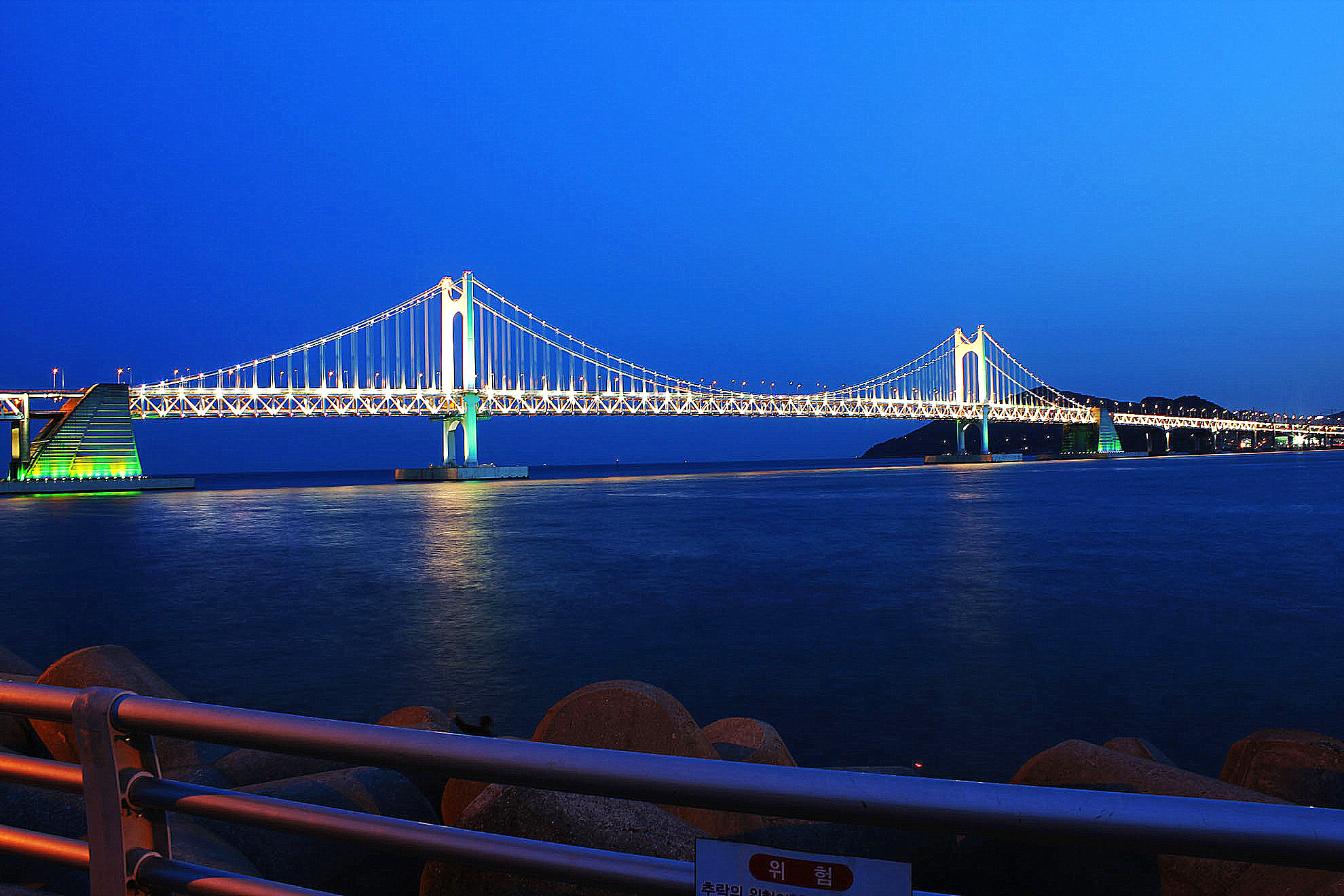
This is the view you end Day 2 with — the Gwangan (Diamond) Bridge from Gwangalli Beach. Photo by Rsmokov via Wikimedia Commons, public domain.
If you want to feel why people fall for this city before you go, watch the Korea Tourism Organization’s viral “Feel the Rhythm of Korea: Busan” — the LEENALCHI band and Ambiguous Dance Company moving through Gwangalli, Haeundae and the old streets. It has 54 million views for a reason; it captures the loose, salt-air energy of a Busan evening better than any photo I could take.
Video: “Feel the Rhythm of Korea: Busan” by the Korea Tourism Organization (official VISITKOREA / Imagine Your Korea channel), embedded from YouTube.
Day 3 — Haedong Yonggungsa + Gijang
Save the most photogenic spot for last.
- Morning: Haedong Yonggungsa. Unlike most Korean temples tucked into mountains, this one sits on the rocks over the sea on the northeast coast. It’s stunning and, be warned, popular — arrive by opening (around 5am if you’re hardcore, or before 9am to beat crowds). From Haeundae it’s a 20–30 minute taxi, or a bus from Haeundae Station. If your Korean is zero and you’d rather not puzzle out the bus, a half-day guided tour bundles it with nearby stops.
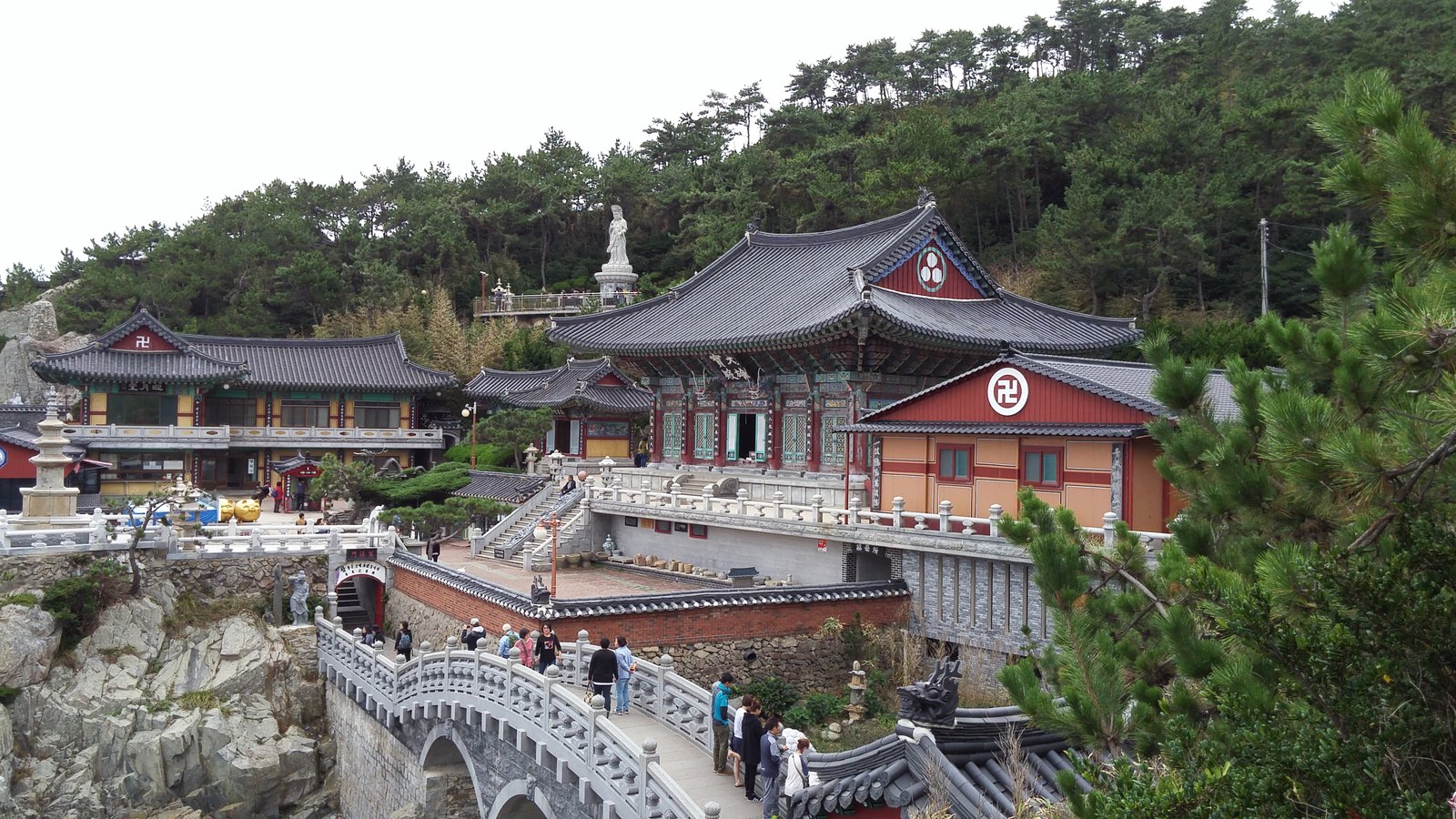
Haedong Yonggungsa — a rare Korean temple built right on the sea cliffs, not in the mountains. Photo by Christian Bolz via Wikimedia Commons, CC BY-SA 4.0.
👉 Book a Haedong Yonggungsa half-day tour on Klook if you’d rather skip decoding the local buses.
- Late morning: Gijang. The area around the temple is known for markets and seaside cafés; the giant glass-fronted coffee houses on this coast are a whole genre of their own. A last long, slow ocean view before you head back.
- Afternoon: Taxi or metro back, collect your bags, and catch an evening KTX to Seoul (or fly out of Gimhae). If your train is late enough, squeeze in one last bowl of dwaeji gukbap — Busan’s signature pork-and-rice soup — near the station before you go. It’s the local comfort dish, cheap and everywhere, and a fitting last meal.
What a 3-day Busan trip actually costs
Here’s an honest, mid-range estimate for one person, two nights, using the plan above. Hotels are per-room, so couples split the biggest line.
| Item | Detail | USD |
|---|---|---|
| KTX round trip | Seoul ↔ Busan, standard seat | $88 |
| Hotel (2 nights) | Mid-range Haeundae, per room | $220 |
| Local transport | Metro, buses, a few taxis | $35 |
| Food (3 days) | Market meals, street food, cafés | $105 |
| Attraction tickets | Sky Capsule, temple tour, extras | $60 |
| Buffer | Souvenirs, snacks, one splurge | $40 |
| Total | solo traveler | ~$548 |
Traveling as a couple, the per-person cost drops to roughly $430 each, since the hotel splits. Backpacking Seomyeon-style with hostels and buses, you can bring it under $320. Either way, Busan is noticeably gentler on the wallet than an equivalent three days in Seoul.
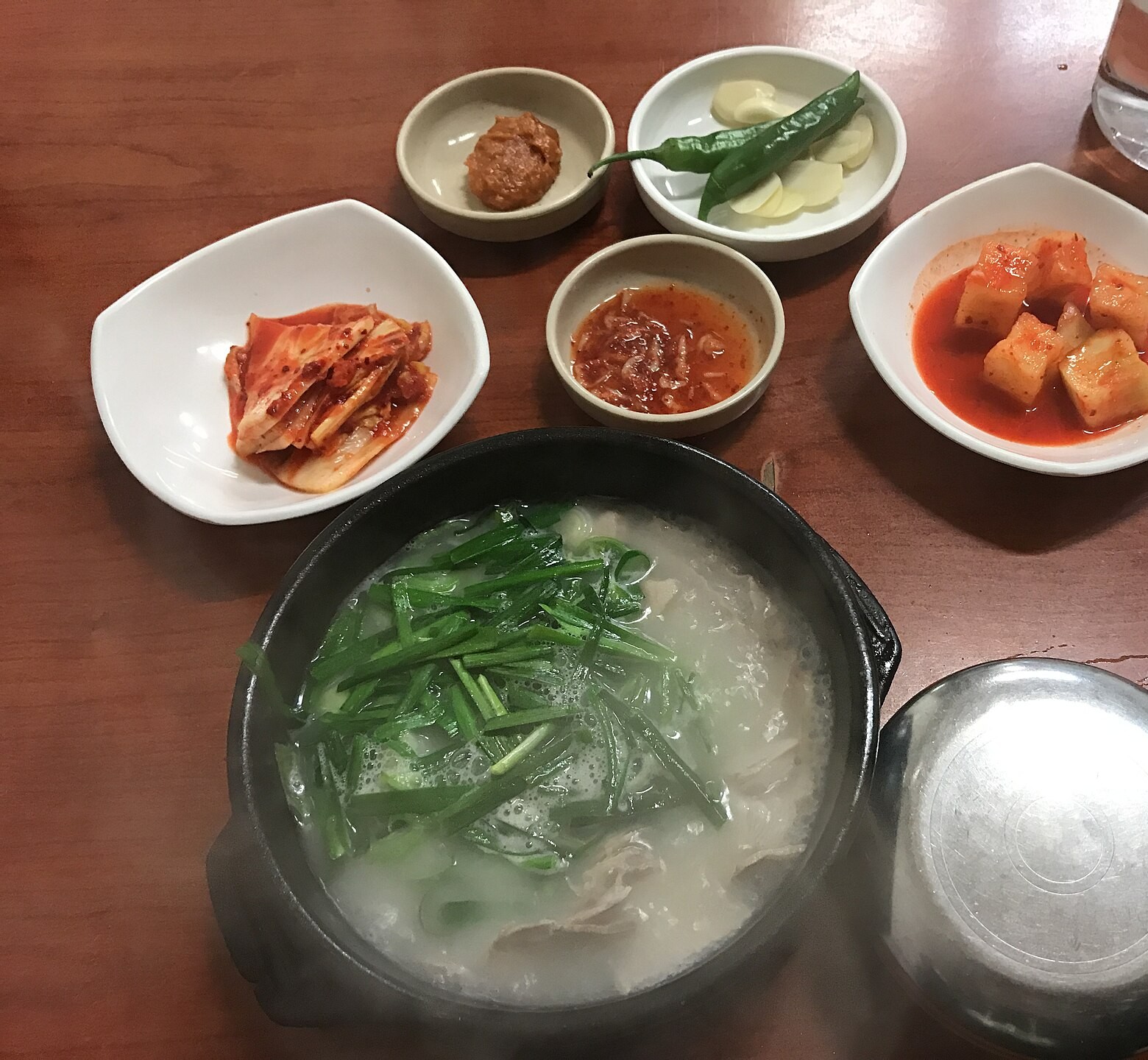 Read next →Don’t waste a single meal in Busan — eat what locals order, not the tourist traps
Wherever you book, run the ten-second check on what kind of property it actually is — Korean motels almost all call themselves hotels, and near Busan Station the ratio is high.
Summer visitors seeking a lively coastal day trip can plan transport and tickets with our Boryeong Mud Festival guide.
FAQ
When’s the best season to visit Busan? Late spring (May) and autumn (late September–October). The search-trend peaks in January and July tell you when Koreans pile in — great energy, but crowded and, in July, hot and humid. Go in the shoulder seasons for beach weather without the crush. If you’re timing a wider trip around fall colour, our Korea autumn foliage guide shows when the south (near Busan) peaks.
Is 3 days enough for Busan? For a first visit, yes — three days covers the culture village, the beaches, and the coastal temple without rushing. A fourth day lets you add Taejongdae cliffs or a Tongyeong day trip, but three is a complete, satisfying trip.
Should I do Busan as a day trip from Seoul instead? No. The KTX makes it technically possible, but you’d spend five hours on trains to get a couple of hours on the ground. Busan’s whole appeal is the slow seaside mornings — stay at least two nights.
Planning Your Korea Trip? Compare Your Options
Compare transport, mobile data, and attraction options. Prices and eligibility depend on your selected date and package.
AREX Incheon ↔ Seoul Express
Express train between Incheon Airport and Seoul Station. Follow the selected voucher’s seat reservation and redemption instructions.
Check AREX Express Tickets →Korea eSIM Options
Compare Korea eSIM search results. Check data allowance, supported network, device compatibility, activation, and speed limits.
Compare Korea eSIM Options →WOWPASS Card (Pay + T-Money)
Compare WOWPASS and T-money. Payment and transit balances are separate; check issuance, top-up, exchange, and withdrawal fees.
Read WOWPASS vs T-money →Top Seoul Passes & Day Tours
Browse general Seoul activity search results. This is not a guaranteed-entry pass or a fixed-discount offer; check each product’s inclusions.
Browse Seoul Activity Options →Sources
- https://datalab.naver.com/keyword/trendSearch.naver
- https://www.letskorail.com/ebizbf/EbizbfForeign_pr16100.do
- https://www.bluelinepark.com/
- https://www.visitbusan.net/en/index.do
- https://english.visitkorea.or.kr/
- https://www.youtube.com/watch?v=xLD8oWRmlAE
- https://www.reddit.com/r/travel/comments/1r2zkbc/south_korea_was_amazing_its_often_overlooked/
Search-trend data from Google Trends (KR) and Naver DataLab. This article is independent commentary and is not affiliated with any broadcaster, agency, or the individuals mentioned.