Travel
Where to Stay in Seoul: Pick the Right Base and Save an Hour of Subway a Day (2026 First-Timer Guide)
The payoff Drowning in Myeongdong-vs-Hongdae-vs-Gangnam advice and scared of picking the base that eats an hour of subway each morning → booked right beside one transit hub in Myeongdong or Insadong, saving an hour a day and meeting the Seoul that actually has character.
📈 Trend signal: Seoul first-time visitor accommodation demand
This guide contains affiliate links — if you book through them we may earn a small commission at no extra cost to you.
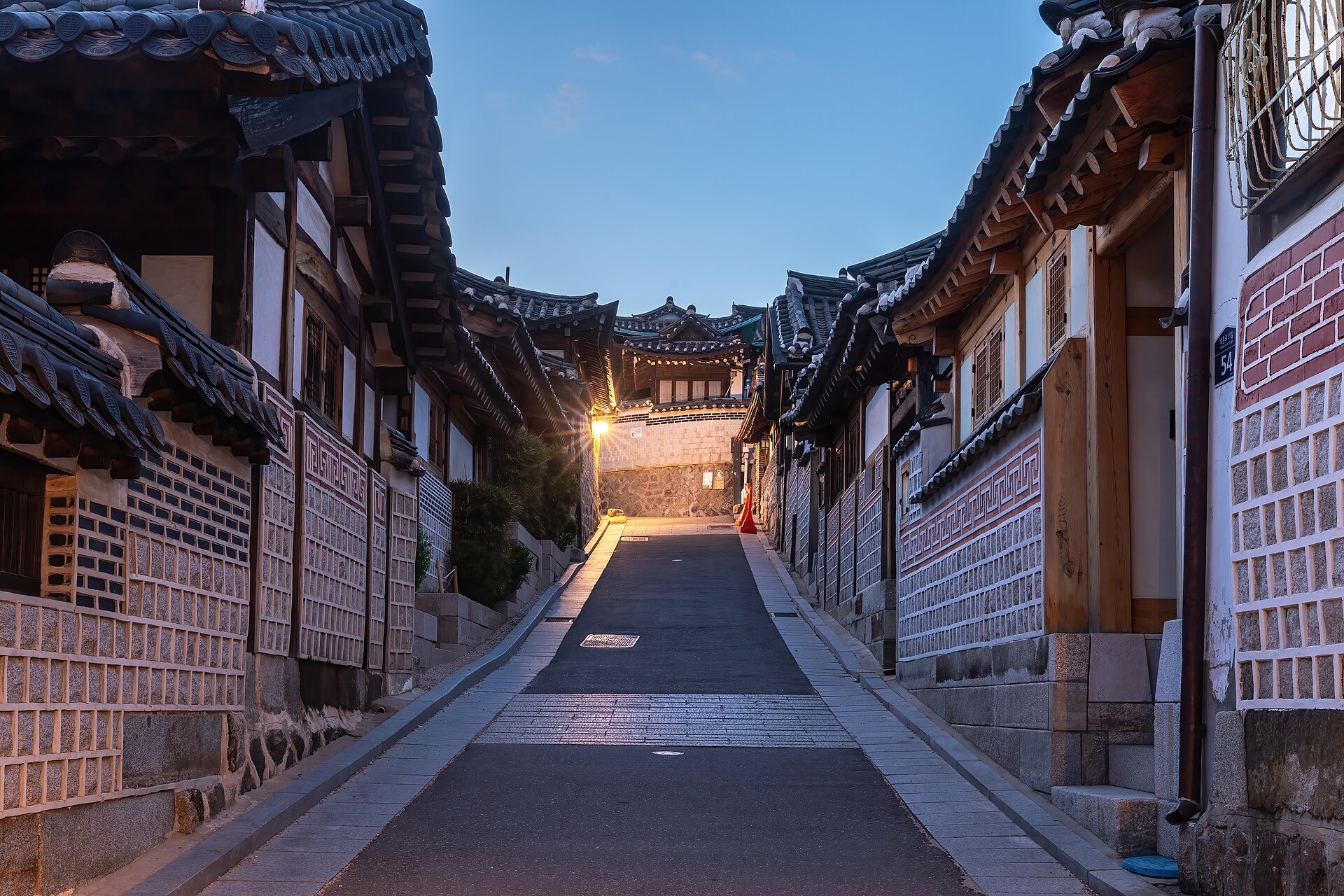
Bukchon Hanok Village, Seoul. Photo by Basile Morin via Wikimedia Commons, CC BY-SA 4.0.
Seoul is enormous, and the single question that trips up first-timers isn’t what to see — it’s where to sleep. Pick the wrong base and you’ll burn an hour on the subway every morning before you’ve even had coffee. Pick the right one and the whole trip flows.
There’s a whole genre of Seoul reviews that end with “it felt kind of soulless.” Scroll r/koreatravel and you’ll find a much-upvoted local pushing back on exactly this — the “no soul” verdict, they point out, almost always comes from people who only slept and shopped around Myeongdong and Gangnam and never based themselves anywhere with character. Where you sleep quietly decides which Seoul you actually meet.
So this isn’t a “top 20 areas” listicle. It’s a decision guide to get you to commit to one base for your first Seoul trip — with the real trade-offs, the nearest transit hub, and the thing nobody warns you about. Every extra transfer is 20–30 minutes and a few thousand won — tapped off a T-money transit card — you don’t get back. Let’s narrow it down.
Picking a neighbourhood is one decision inside a bigger plan — if you’re still assembling the whole trip, my Seoul travel guide for first-timers walks through the order to decide things in.
Myeongdong — the safe, central default
If you asked me to name the lowest-risk first-timer base in Seoul, I’d say Myeongdong without hesitating. It sits smack in the historic downtown core, it’s wall-to-wall skincare shops, department stores (Lotte and Shinsegae are both here), and street-food carts, and — crucially — it’s a short walk from three of the city’s five palaces and the Namsan cable car. If you plan to tick off a lot of those paid sights from here, it’s worth checking whether a Discover Seoul Pass pays for itself before you buy tickets one at a time.
Transit is the real selling point. Myeongdong Station on Line 4 puts you one or two transfers from almost anywhere, and Euljiro 1-ga Station on Line 2 sits at the other end of the district, a ten-minute walk away, giving you the loop line too. Two lines, one neighborhood.
The watch-out: Myeongdong is touristy in the extreme. Prices run higher, the main drag is a crush by evening, and some blocks feel more like an open-air mall than a city you’re getting to know. If “authentic” matters more to you than “convenient,” read on. But for a first trip where you want to see the classics with minimum friction, this is the default for a reason.
Specific picks by budget: for an upscale-but-not-crazy base, Le Méridien Seoul Myeongdong is a reliable four-star; mid-range, Nine Tree by Parnas Seoul Myeongdong and L7 Myeongdong by Lotte are both well-rated and central; on a budget, Hotel Skypark Myeongdong III is a solid value pick, and Blueboat Hostel Myeongdong covers backpackers.
👉 Browse Myeongdong hotels on Booking.com
Hongdae — young, loud, and cheap
Hongdae is the university-and-nightlife district, built around Hongik University’s art school. Think indie music, street performers, thrift shops, themed cafés open past midnight, and the best-value beds in central Seoul. If you’re in your twenties, traveling on a budget, or you plan to be out late anyway, this is your spot.
It also has a secret weapon most first-timers overlook: Hongik University Station is on the AREX airport line, so you can ride the train straight from Incheon Airport to your neighborhood without a single transfer — just make sure your phone’s already online when you land (our Korea eSIM guide covers setting one up before you fly). It’s also on Line 2 (the loop) and the Gyeongui–Jungang Line, and it’s one of the busiest stations in the entire Seoul Metro — which tells you how alive the area is.
The watch-out: Hongdae sits on the west side of the city, so the historic sights, palaces, and Gangnam are all a 25–45 minute ride away. And it’s genuinely loud — light sleepers should book a room facing away from the main streets. It’s a fantastic base if the nightlife is the point; a slog if you’re mainly here for palaces and museums.
Specific picks by budget: the design-forward RYSE, Autograph Collection (a Marriott, with a 15th-floor rooftop bar right by Hongik Station) is the standout upscale stay; L7 Hongdae by Lotte is a stylish mid-to-upper option with a rooftop pool; and budget travelers have their pick of guesthouses and hostels like 9 Brick Hotel in the backstreets.
👉 Browse Hongdae hotels on Booking.com
Gangnam — sleek, modern, and a bit far
Yes, that Gangnam. South of the river, it’s the glossy business-and-luxury district: designer flagships, high-end plastic-surgery clinics, rooftop bars, and some of the city’s best hotels. If you want a modern, polished, corporate-clean version of Seoul — or you’re here partly for business or K-pop-industry pilgrimages (many entertainment agencies are nearby) — Gangnam delivers.
Gangnam Station is served by Line 2 and the fast Sinbundang Line, and it’s one of the single busiest stations in the country, so getting around Gangnam is easy.
The watch-out: getting out of Gangnam to the old-city sights north of the Han River eats 30–40 minutes each way, every day. The area is also more spread-out and less walkable than the northern neighborhoods, and it’s the priciest base on this list. I’d only pick Gangnam for a first trip if modern Seoul is what you came for, or you don’t mind the commute in exchange for the polish.
Specific picks: this is the district for a splurge — The Westin Josun Seoul is the polished luxury option, and the five-star Novotel Ambassador Seoul Gangnam (near Sinnonhyeon Station, with an indoor pool) is a slightly more moderate but still upscale base. Gangnam skews pricey across the board, so it’s less of a budget-hostel neighborhood than the others here.
👉 Browse Gangnam hotels on Booking.com
Insadong & Jongno — traditional and quietly convenient
This is my sleeper pick. Insadong is a 700-meter pedestrian street of tea houses inside actual hanok homes, calligraphy shops, art galleries, and craft boutiques, wrapped inside the wider Jongno district. It’s walkable to Gyeongbokgung and Changdeokgung palaces, Bukchon Hanok Village, and Jogyesa Temple — basically all the “old Seoul” postcards, on foot.
This is the part a hotel photo can’t sell you. On any clear afternoon the hanok lanes just north of Insadong fill with visitors in rented hanbok, drifting between tiled-roof houses and stopping for tea inside 100-year-old courtyards. Here’s Korea.net’s official tourism series walking those exact Bukchon lanes — the feeling you’re actually booking when you pick this base:
Video: “Heritage Hotspots” walking tour of Bukchon Hanok Village, a few minutes’ walk from Insadong. Credit: Korea.net (@gatewaytokorea), the official YouTube channel of the Korean government’s Korea.net portal.
It’s more central than people realize. Anguk Station on Line 3 exits right at the top of Insadong’s main street, and Jonggak Station on Line 1 is a five-minute walk from the south end. You get palace-district atmosphere without sacrificing the subway.
The watch-out: Insadong itself winds down early and is quieter at night — this is a feature if you want calm evenings, a drawback if you want to stumble home from a club. Hotel stock leans toward mid-range and boutique rather than big international chains. For culture-first travelers and families who want atmosphere plus convenience, though, it’s the best balance on this list.
Specific picks: for a once-in-a-trip experience, Rakkojae Seoul is a restored 130-year-old hanok in Bukchon Hanok Village (only a handful of rooms, so it books out far ahead); for a comfortable, well-located mid-range hotel, Nine Tree Premier Hotel Insadong sits minutes from Anguk Station and the palaces.
👉 Browse Insadong & Jongno hotels on Booking.com
Itaewon — international, English-friendly, party-ready
Itaewon grew up around a former US military base into Seoul’s most international neighborhood: Turkish doner next to Nigerian buffets next to premium Korean BBQ, plus the city’s most diverse nightlife and its most LGBTQ-friendly bars. It’s the most English-friendly area in Seoul, menus are usually bilingual, and it’s the easiest place to find halal food. It sits just below Namsan Park, so the tower and its trails are close.
Transit runs on Itaewon Station, Line 6 (Noksapyeong Station, also Line 6, covers the west end).
The watch-out: Line 6 is a bit of an outlier — reaching the palace district or Gangnam usually means a transfer, so it’s slightly less plug-and-play than Myeongdong. The nightlife also means noise. I’d pick Itaewon if global food, an international crowd, and easy English are what put you at ease on a first trip abroad.
Specific picks by budget: the Grand Hyatt Seoul, perched on Namsan just above Itaewon, is the luxury landmark (huge grounds and city views); the long-standing Hamilton Hotel Seoul is the iconic mid-range choice right on the main strip; and the newer Seoul Cube Hostel Itaewon, steps from Itaewon Station, covers budget and solo travelers.
👉 Browse Itaewon hotels on Booking.com
Seoul neighborhoods compared, at a glance
Here’s the whole decision on one screen. This is the table I wish I’d had before my first trip.
| Neighborhood | Vibe | Best for | Price level | Nearest transit hub | Watch-out |
|---|---|---|---|---|---|
| Myeongdong | Bright, busy downtown | First-timers wanting central & easy | $$$ | Myeongdong (Line 4) + Euljiro 1-ga (Line 2) | Very touristy, pricey, crowded |
| Hongdae | Young, indie, nightlife | Budget travelers, night owls | $$ | Hongik Univ. (Line 2, AREX, Gyeongui–Jungang) | West side; far from palaces; loud |
| Gangnam | Sleek, modern, upscale | Luxury & modern-Seoul seekers | $$$$ | Gangnam (Line 2, Sinbundang) | 30–40 min to old-city sights; spread out |
| Insadong / Jongno | Traditional, artsy, calm | Culture-first travelers, families | $$–$$$ | Anguk (Line 3) + Jonggak (Line 1) | Quiet at night; fewer big chains |
| Itaewon | International, diverse | English-first travelers, foodies | $$–$$$ | Itaewon (Line 6) | Transfers to reach palaces/Gangnam; noisy |
Price levels are relative to each other, not absolute — Seoul has budget and luxury options in every one of these areas.
My pick for a first trip
If you’re a first-timer and you want a single answer: stay in Myeongdong or Insadong.
Choose Myeongdong if convenience and shopping top your list — you’ll get two subway lines, palaces within walking distance, and zero navigational stress, at the cost of tourist prices and crowds. Choose Insadong/Jongno if you’d rather sleep somewhere with actual character — hanok tea houses, palace-district walks, quieter nights — while staying just as central thanks to Anguk and Jonggak stations.
Personally, I’d base a first Seoul trip in Insadong: old-city magic on foot, one transfer from everywhere else, and a neighborhood that feels like Korea rather than a mall. Save Hongdae, Gangnam, and Itaewon for day trips out from there — or for a second visit, once you know which side of Seoul you love.
 Read next →Don’t overpay on arrival — the ₩4,150 train from Incheon that beats a ₩90,000 taxi
Once the neighbourhood is settled, the rest of the trip is easier to shape — the full Seoul guide covers what to actually do from each base.
One check worth running on whatever you pick: a lot of Korean love motels are named “hotel”, and the listing won’t tell you. Here’s the ten-second way to know what you booked — and why the motel is sometimes the better room.
When online checkouts or booking platforms fail due to SMS authentication, check our foreign card 3DS payment failure fixes.
FAQ
Which Seoul neighborhood is best for nightlife? Hongdae for the young, club-and-live-music crowd, and Itaewon for a more international, diverse bar scene. Both are on convenient subway lines, but note the trains stop running around midnight — either budget for a taxi home or stay in the district you plan to party in.
Which area is best for families with kids? Insadong/Jongno. It’s central, walkable, calmer at night, and steps from the palaces and Bukchon Hanok Village that kids actually enjoy. Myeongdong works too for its convenience and dining, but the evening crowds can be a lot with little ones.
How many days should I spend in Seoul? Three to four full days is the sweet spot for a first visit — enough for the palaces, a couple of neighborhoods, a day trip, and some unhurried eating. With five or more, add a DMZ day trip or run down the coast — our 3-day Busan itinerary pairs perfectly with a Seoul week. Whatever you do, staying in one well-chosen base beats hopping hotels.
Planning Your Korea Trip? Compare Your Options
Compare transport, mobile data, and attraction options. Prices and eligibility depend on your selected date and package.
AREX Incheon ↔ Seoul Express
Express train between Incheon Airport and Seoul Station. Follow the selected voucher’s seat reservation and redemption instructions.
Check AREX Express Tickets →Korea eSIM Options
Compare Korea eSIM search results. Check data allowance, supported network, device compatibility, activation, and speed limits.
Compare Korea eSIM Options →WOWPASS Card (Pay + T-Money)
Compare WOWPASS and T-money. Payment and transit balances are separate; check issuance, top-up, exchange, and withdrawal fees.
Read WOWPASS vs T-money →Top Seoul Passes & Day Tours
Browse general Seoul activity search results. This is not a guaranteed-entry pass or a fixed-discount offer; check each product’s inclusions.
Browse Seoul Activity Options →Sources
- https://english.visitseoul.net/
- https://english.visitkorea.or.kr/
- https://en.wikipedia.org/wiki/Hongik_University_station
- https://en.wikipedia.org/wiki/Gangnam_station
- https://www.roughguides.com/articles/best-area-to-stay-in-seoul/
- https://www.youtube.com/watch?v=P7VMkI2JjWE
- https://www.reddit.com/r/koreatravel/
Search-trend data from Google Trends (KR) and Naver DataLab. This article is independent commentary and is not affiliated with any broadcaster, agency, or the individuals mentioned.