Travel
Korea Emergency Disaster Alerts: Why Your Phone Screams in Korean & How to Silence the Siren
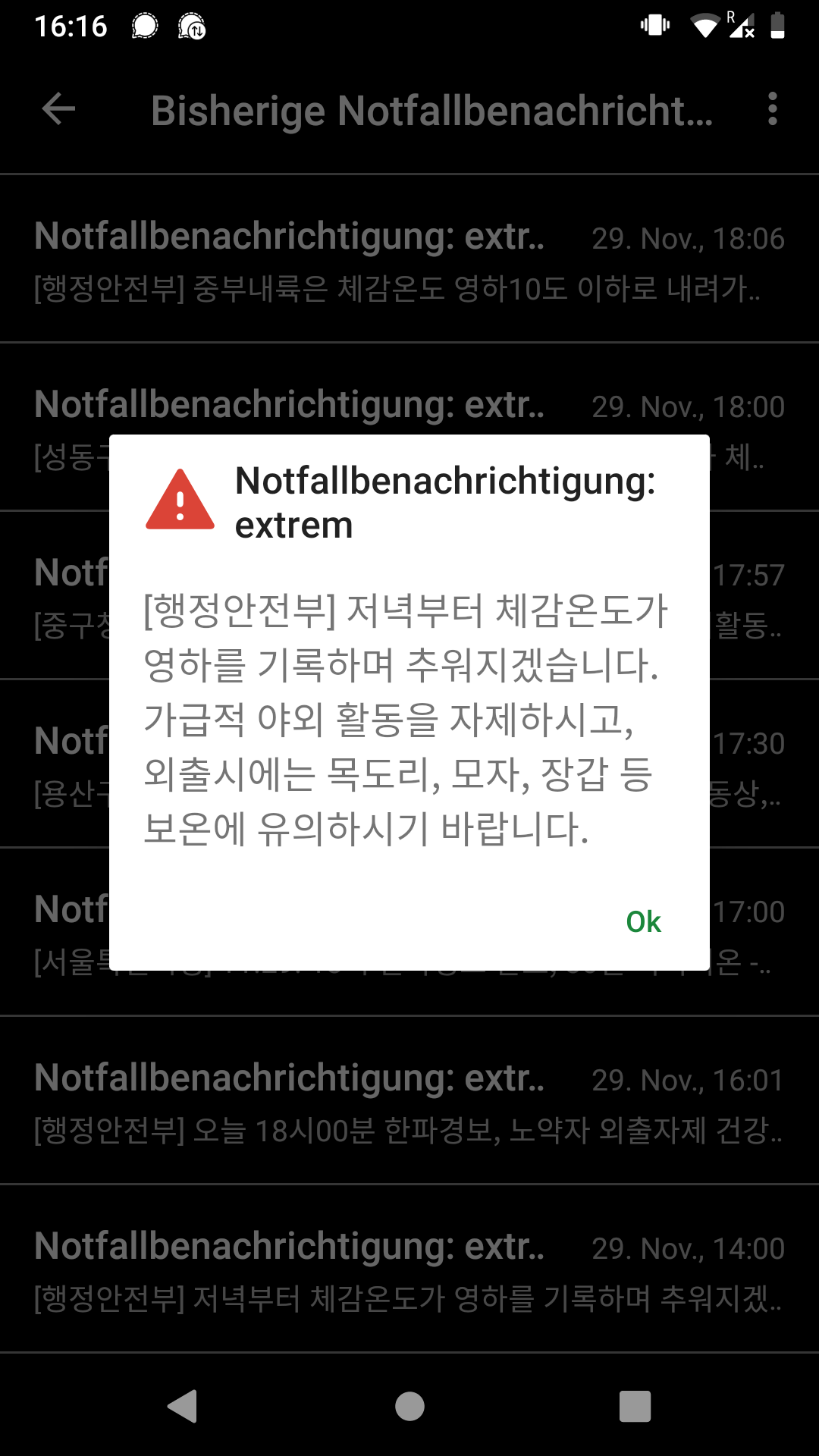
Research context: Persistent panic among international tourists waking up to piercing smartphone siren alerts in Korean characters (r/koreatravel, r/seoul)
You are asleep in your hotel room in Myeongdong or Hongdae. It is 6:45 AM.
Suddenly, a sound erupts from your nightstand that sounds like an impending air-raid siren: a loud, high-pitch electronic klaxon that shakes the furniture.
You scramble for your phone in sheer panic, your heart pounding, expecting the worst. You look at the screen.
There is a giant full-screen alert box filled entirely with urgent-looking Korean Hangul characters:
[행정안전부] 오늘 06시40분 서울지역 호우주의보 발효. 산사태 취약지역, 하천변 산책로 등 위험지역 출입을 자제하시기 바랍니다.
If you cannot read Korean, your mind immediately races to war, North Korean missiles, or catastrophic earthquakes.
Then you step out into the hallway or ride the subway, and you notice every local Korean casually glances down at their phone, taps “OK,” and goes right back to sipping their iced Americano.
What just happened?
You just received your first Korean Disaster Alert Text (재난문자 / Jae-nan Mun-ja). South Korea operates a phone-alert system that uses Cell Broadcasting Service (CBS). However, because alerts are targeted by local cellular towers rather than your phone’s home nationality, most messages are sent in Korean only.
Here is the straightforward breakdown of what these screaming sirens actually mean, how to decode the most common templates in five seconds, and how to safely quiet the ear-piercing siren without compromising your travel safety.
1. The 3 Tiers of Korean Disaster Alerts (By Law)
Under regulations set by South Korea’s Ministry of the Interior and Safety (행정안전부 / MOIS), emergency cellular broadcasts are divided into three categories. Understanding the difference between them will instantly lower your blood pressure.
| Alert Category | Korean Name | Sound | Can You Mute / Turn Off? | What It Usually Means |
|---|---|---|---|---|
| Critical Emergency Alert | 위급재난문자 | Loudest alarm tone (set by the phone) | Usually cannot be switched off (check your phone’s emergency-alert settings) | Wartime air-raid alarms, chemical/biological attacks, or massive earthquakes (magnitude 6.0+). Extremely rare. |
| Emergency Disaster Alert | 긴급재난문자 | Loud warning tone | Usually yes (phone settings) | Sudden localized life hazards: torrential downpours (극한호우), severe flash flood/landslide evacuations, wildfires, or North Korean trash balloons falling nearby. |
| Public Safety Advisory | 안전안내문자 | Normal SMS Text Chime | Usually yes (phone settings) | Routine daily safety advisories: seasonal heatwaves (폭염), sub-zero cold snaps (한파), heavy snowfall, high fine dust (미세먼지), or missing person notices. |
If your phone simply made a standard “ding” or vibrated, it is a routine Safety Advisory (안전안내문자) reminding elderly citizens to drink water during a hot afternoon.
If your phone made the terrifying klaxon sound, it was a 긴급재난문자 (Disaster Alert)—almost always triggered by localized sudden summer downpours, a nearby flash flood warning along the Han River tributaries, or overnight trash balloon tracking.
2. Deciphering the 5 Most Common Alert Templates
You do not need to study Korean for three months to figure out whether you need to evacuate your hotel. Many alerts use these five standard phrases:
1) Heavy Rain & Flash Floods (여름 호우·산사태)
- What you see on screen:
호우경보,호우주의보,산사태,하천변 출입금지 - What it actually means: Heavy monsoon rain has hit your district. Seoul’s steep mountain topography means low-lying stream pathways (like Cheonggyecheon in central Seoul) flood in minutes.
- What to do: Do not walk along sunken riverside walking trails or hike up Bukhansan/Namsan dirt trails during the storm. Stay on paved sidewalks.
2) North Korean Trash Balloons (대남 오물풍선 낙하 주의)
- What you see on screen:
북한 대남 오물풍선,적재물 낙하 주의,미상 물체 발견 시 신고 - What it actually means: North Korea has floated paper and waste balloons south across the DMZ on northern wind currents.
- What to do: Do not panic; these are not explosive munitions. The alert is warning pedestrians not to touch fallen debris, plastic bags, or timers on the street, and to report sightings by dialing 112 (Police) or 1338 (Military).
3) Fine Dust & Yellow Dust Emergencies (미세먼지 비상저감조치)
- What you see on screen:
미세먼지 비상저감조치,초미세먼지 주의보,마스크 착용 - What it actually means: High atmospheric particulate matter (PM2.5 / PM10) blown over the Yellow Sea has settled over the Seoul metropolitan basin.
- What to do: Pop into any convenience store or pharmacy, pick up an inexpensive KF94 mask (the Korean equivalent of an N95), and avoid strenuous outdoor workouts.
4) Heatwaves & Cold Snaps (폭염경보 & 한파주의보)
- What you see on screen:
폭염경보 (낮 야외활동 자제)or한파주의보 (동파 예방) - What it actually means: Temperatures in July/August have exceeded 35°C (95°F), or winter temperatures in January have plunged below -10°C (14°F).
- What to do: Stay hydrated, duck into air-conditioned cafes or underground subway arcades during mid-afternoon, or bundle up against windchill.
5) Missing Elderly / Silver Alerts (실종자 찾기)
- What you see on screen:
실종자(남/여, O세), clothing descriptions (착의: 파란색 조끼),목격 시 112 신고 - What it actually means: Local police precincts broadcast missing person notices for dementia patients or lost children in the immediate neighborhood.
- What to do: It involves zero threat to your safety; tap “Close.”
3. How to Silence the Siren on iPhone and Android
You want to remain safe while traveling, but you also need uninterrupted sleep after an 11-hour flight. Here is how to silence the shrill sirens while staying informed:
On iPhone (iOS):
- Open Settings (설정) ➔ Tap Notifications (알림).
- Scroll all the way down to the bottom to Government Alerts (정부 경보).
- You will see three toggles:
- Emergency Alerts (긴급재난문자)
- Public Safety Alerts (안전안내문자)
- Test Alerts
- The Smart Setting for Tourists: Toggle Public Safety Alerts OFF (this eliminates the non-stop daytime notices about missing persons, dust, and temperature). Keep Emergency Alerts ON, or toggle both off if the siren wakes you up at night and rely on the English app below.
On Android (Samsung Galaxy / Google Pixel):
- Open Settings (설정) ➔ Tap Safety and emergency (안전 및 긴급).
- Select Wireless emergency alerts (무선 긴급 경보).
- Toggle off Public safety messages (안전안내문자) while keeping critical warnings active, or toggle Vibration only so your device vibrates instead of sounding the full alarm siren.
4. The Official English Solution: Emergency Ready App
If turning off government alerts makes you anxious about missing a real emergency, the Korean government created a dedicated, official multilingual companion app specifically for international visitors: The Emergency Ready App (안전디딤돌 외국인용).
Operated directly by the Ministry of the Interior and Safety (MOIS), this app automatically receives national disaster messages, translates them in real time into English, and delivers them as standard push notifications without sounding the terrifying air-raid alarm.
- Where to get it: Free on both Apple App Store and Google Play Store (Search:
Emergency Ready App). - Languages supported: English, Chinese, Japanese, Vietnamese, and Thai.
- Key offline features:
- English evacuation instructions for earthquakes, typhoons, and floods.
- Interactive map showing the nearest Civil Defense Shelters (대피소) and emergency rooms.
- Direct one-tap speed dial to the 1330 Korea Travel Helpline (24/7 English assistance) and 119 Emergency Services.
If severe weather, a sudden accident, or illness leaves you needing urgent clinical care in Seoul, consult our Korea emergency medical and 1339 English hospital guide for walk-in clinic fees and travel insurance reimbursement.
FAQ
Will Korean disaster texts charge roaming fees to my foreign SIM card?
No. Korean disaster messages use Cell Broadcasting Service (CBS) technology, which operates on a radio broadcast frequency rather than individual cellular SMS. Receiving an alert consumes zero mobile data, incurs no telecom roaming charges, and works even if your travel eSIM has expired or has data disabled.
What should I do if a siren sounds while I am riding the Seoul Subway?
Nothing at all. In a crowded train car, dozens of smartphones will simultaneously scream in chorus. Look around: unless station staff or subway conductor intercom announcements instruct passengers to disembark, train operations continue normally. It is almost always an automated river flood warning or localized thunderstorm notice.
Does 112 or 119 have English-speaking dispatchers?
Yes. If you encounter a genuine physical emergency, dial 119 (Fire & Medical Ambulance) or 112 (Police). Both agencies operate integrated three-way interpretation services in English. If you ever feel disoriented, calling the 1330 Korea Travel Helpline immediately connects you to a fluent English coordinator who can liaise with emergency responders on your behalf.
Sources checked
Rules, fees and opening details change. Before you rely on any figure above, confirm it with the official source:
- Safe Korea (Ministry of the Interior and Safety) — Disaster Alert Text (재난문자) Guide — official explanation of the 3 disaster alert tiers.
- National Fire Agency — emergency number 119 and safety guidance.
- Korea Tourism Organization (VISITKOREA) — 1330 Travel Helpline & Complaint Center — 24/7 multilingual tourist helpline details.
Sources
- https://www.safekorea.go.kr/safekorea-kor/ctim/cmsg/calamitySms.do?menuSn=34&firstYn=Y
- https://www.nfa.go.kr/nfa/
- https://english.visitkorea.or.kr/svc/contents/infoHtmlView.do?menuSn=177&vcontsId=140632
This is independent guidance, not an official operator or government publication. Evidence and check dates vary by article. See our editorial and corrections policy for the distinction between source checks, personal visits and planning advice.