Travel
Busan Travel Guide 2026: The First-Timer's Plan (Beaches, Food & How to Get There)
The payoff Staring at a map of a coastal city you can't read, unsure if Busan is even worth leaving Seoul for → a 3-day plan with the train booked, the right beach chosen, and the apps set up, all in for around $430–$550.
📈 Trend signal: Busan travel (our own Pinterest data: the Busan itinerary pin pulls ~4× the saves of our #2 pin; Naver DataLab: Busan out-searches Seoul all 12 months)
This guide contains affiliate links — if you book through them we may earn a small commission at no extra cost to you.
You’ve decided to add Busan to your Korea trip — good instinct — and now you’re staring at a map of a city on the far south coast, in a language you can’t read, wondering how you actually get there, where you’re supposed to sleep, and whether three days is too many or not enough. Every blog seems to hand you a list of “top 10 spots” without answering the boring questions that actually decide whether the trip goes smoothly.
This is the page that answers those questions in order. I’ve lived in Seoul for five years and taken the run down to Busan more times than I can count. Think of this as the map of the whole trip: I’ll give you the real answer to each decision right here, then point you to the deeper guide when you’re ready to go one level down. No fluff, no “you simply must experience the vibrant energy” — just what to do first, second, and third.
One quick note on why Busan gets its own hub on this site: it’s what you keep asking for. Our Busan travel pin has pulled roughly four times the saves of our next-most-popular pin on Pinterest — more demand than any Seoul topic we publish. So if Busan is pulling at you, you’re in a very large, very good crowd.
First question: is Busan even worth a separate trip?
Short answer: yes, and it’s not close. Here’s the honest version most itineraries skip.
Koreans themselves vote for Busan with their search history. When I pulled 18 months of Naver DataLab data comparing “Busan travel” (부산여행) against “Seoul travel” (서울여행) inside Korea, Busan out-searched Seoul in all twelve months, peaking at an index of 100 while Seoul rarely cleared 70. This is the domestic vacation capital — the place locals go when they want a break, not the place they live and work.
The mistake first-timers make is filing Busan under “day trips.” It isn’t one. The KTX makes a same-day round trip technically possible, but you’d burn five hours on trains for a couple of rushed hours on the ground, and Busan’s entire appeal — slow seaside mornings, a coffee facing the water, seafood with no clock on it — evaporates when you’re racing a return ticket. If you want genuine day trips, keep those close to your Seoul base; our guide to cheap day trips from Seoul by subway and rail is built for exactly that, and Busan deliberately isn’t on it. Busan is a destination, and the right dose is three days, two nights.
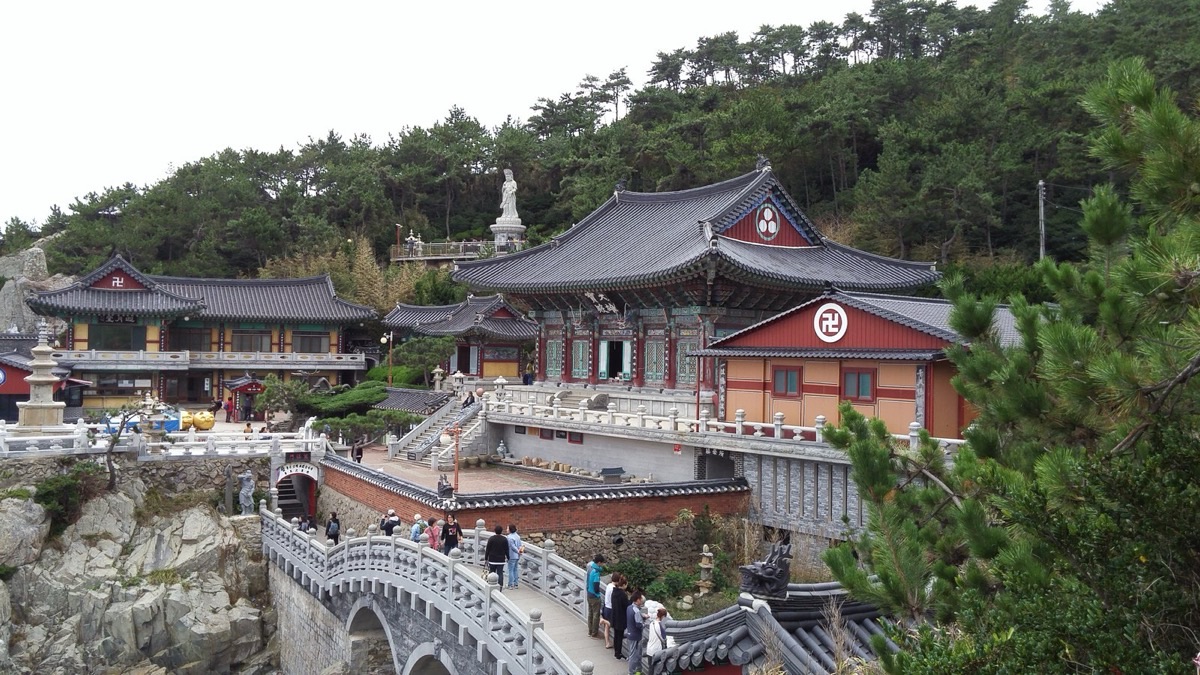
What you get for those three days: a hillside of pastel houses (Gamcheon), Korea’s biggest fish market (Jagalchi), two very different beaches, a temple built onto sea cliffs (Haedong Yonggungsa), and food that costs noticeably less than the equivalent in Seoul or Japan. A widely-shared r/travel writeup with nearly 8,000 upvotes called Busan the writer’s favourite stop for “the perfect mix of nature and city,” noting food and stays ran 15–20% cheaper than Japan. That combination — coastline, hills, low prices — is what the whole trip is really about.
Getting there: how to travel Seoul → Busan
Assuming Seoul is your entry point (it is for most first-timers), you have three ways south, and for a first trip the choice is easy.
Take the KTX high-speed train. Seoul Station to Busan Station in about 2 hours 30 minutes, departures every 15–30 minutes through the day, standard fare around ₩60,000 (~$44) one way. It drops you in the city centre steps from the metro — no airport transfers, no baggage hassle, and the countryside rolls past your window. Book a day or two ahead in summer and on holiday weekends; the popular departures sell out.
The express bus (~₩35,000 / ~$26, but 4.5–5 hours and hostage to traffic leaving Seoul) is the budget play, and flying Gimpo–Gimhae looks fast on paper but nets out roughly the same door-to-door once you add both airports. For a first-timer, the train wins on every axis except raw ticket price.
There’s one wrinkle worth thirty seconds of thought: if Busan is part of a bigger multi-city loop, a foreigner rail pass can beat buying tickets one at a time. We run the actual numbers in Korail Pass vs KTX tickets so you can tell which side of the line your particular trip falls on — for a simple Seoul-and-back-Busan trip, point-to-point tickets usually win; for four-plus cities, the pass often does.
👉 Booking the train and a Haeundae hotel together is the cleanest way to lock your dates.
Where to sleep: pick the neighbourhood before the hotel
This is the one decision that quietly shapes your whole trip, and most people get it backwards — they pick a hotel by price and only later realise it’s nowhere near what they came for. Choose the neighbourhood first.
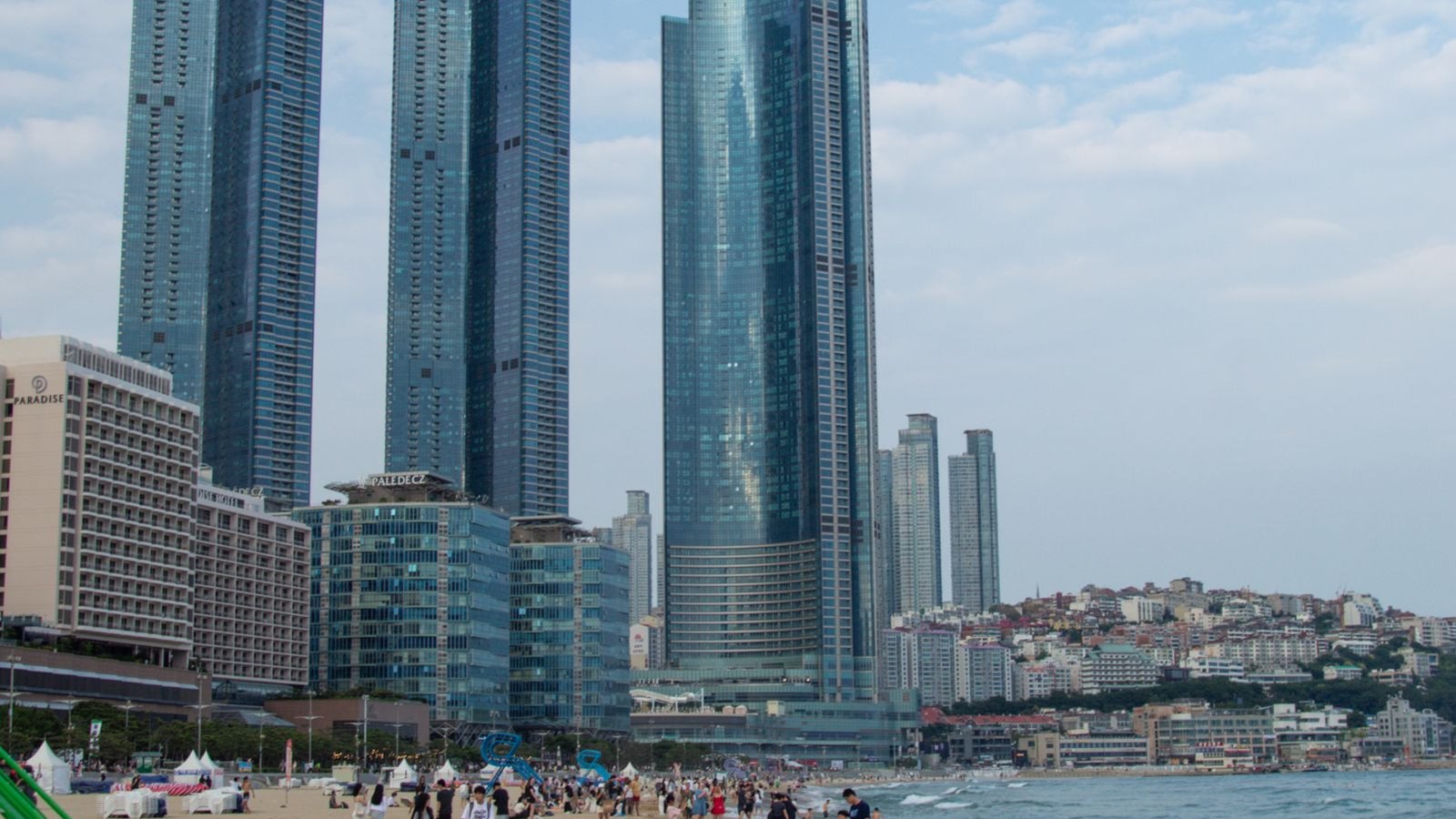
For a first visit chasing the classic Busan feeling, you’re really choosing between two beach districts. Haeundae is the postcard: a broad beach, resort-relaxed energy, walkable to Blueline Park, and you wake up to the ocean. Gwangalli is the younger, cheaper, more local-feeling stretch, its sand facing the Gwangan Bridge that lights up after dark. Both put you on the water; they just feel different, and — this surprises everyone — they can price very differently on the same night.
Rather than guess, read our head-to-head first: Haeundae vs Gwangalli breaks down the vibe, the transit, and a real beachfront price gap that ran $190 vs $532 on a peak Saturday. Decide which of the two you want to wake up on, then open the booking site. (Seomyeon, the central transport-and-shopping hub, is the cheaper no-beach alternative if nightlife matters more to you than sand.)
👉 Search by beach rather than by city — Haeundae and Gwangalli return very different price ranges on the same night, and comparing them side by side is the whole exercise.
The stakes here are real: book blind and you can end up paying a beachfront premium for a view you didn’t want, or land in a cheap room a 25-minute ride from every place on your list. Ten minutes on the neighbourhood question saves both.
What to eat: the short version
Busan is a food city more than a sightseeing city, and eating well here costs less than eating averagely in Seoul. The two dishes to try first are dwaeji gukbap (돼지국밥, a milky pork-and-rice soup, ~₩8,000–12,000 — season it yourself at the table) and milmyeon (밀면, cold springy wheat noodles, ~₩7,000–10,000) — a dish literally invented from U.S. Army wheat flour by wartime refugees in Busan, which is why it exists nowhere else. Add a ₩1,500–2,000 seed-stuffed ssiat hotteok pancake at BIFF Square and a flounder platter at Jagalchi fish market, and you’ve eaten the city.
The one skill worth learning before you go is how not to get overcharged at Jagalchi — the rule is to agree the price before they net your fish, and to expect a legitimate ₩5,000–6,000 table-setting fee upstairs. Our full Busan food guide walks through all eight dishes locals actually order, the fair 2026 price of each, and the market etiquette that keeps you from paying tourist rates. Read it before your first dinner, not after.
A sample 3-day route (so the days actually flow)
You don’t want to zig-zag the city. Busan rewards running the west side first, then the beaches, then the coast. Here’s the shape of a smooth three days — think of it as the skeleton; the hour-by-hour version, with transit and timings, lives in our 3-day Busan itinerary.
| Day | Morning | Afternoon | Evening |
|---|---|---|---|
| 1 — West side | Gamcheon Culture Village (pastel hillside; go early, wear real shoes) | Jagalchi fish market lunch → BIFF Square street food | Nampo-dong shopping lanes, easy first night |
| 2 — Beaches | Haeundae Beach + Blueline Park (reserve the Sky Capsule online — it sells out) | Dongbaek Island seaside loop | Gwangalli Beach: dinner, then the lit Gwangan Bridge (weekend drone shows) |
| 3 — Coast | Haedong Yonggungsa temple on the sea cliffs (arrive before 9am) | Gijang seaside cafés | Last bowl of dwaeji gukbap near the station → evening KTX back |
Two planning notes that save the day from unravelling: the Sky Capsule at Blueline Park sells out days ahead in summer, so reserve the Blueline Park ticket online rather than queuing (walk-up waits hit two to three hours), and Haedong Yonggungsa is gorgeous but wildly popular — get there near opening or you’re photographing the backs of other people’s heads. Everything else on this route flexes; those two reward being early.
Set this up before you board the train
Here’s the part no “top 10 Busan” list tells you, and the part that actually decides whether your trip feels smooth or stressful. Sort these three things before you leave Seoul — ideally before you even land in Korea.
- Get mobile data. Metro apps, the Sky Capsule reservation, restaurant maps — none of it works without a connection, and Busan’s beaches are not the place to discover you’re offline. Our Korea eSIM guide covers which plan to actually buy (and which to skip) so data is live the moment you land.
- Load a T-money card. Busan’s metro, buses, and even most taxis run on the same tap-to-pay transit card as Seoul, and reload machines take cash only. Here’s how the T-money card works, where to buy and top it up, and the gotchas — do it once in Seoul and you never think about fares again.
- Install Naver Map or KakaoMap. This is the one that catches everyone: Google Maps has almost no walking or transit directions inside Korea. It’ll show you the map and then refuse to route you. The locals use Naver Map and KakaoMap instead, and our Korea maps guide shows how to set them up in English so you can actually navigate Gamcheon’s alleys and the bus to the temple.
Do these three on the couch before your trip and Busan stops being a place you decode and becomes a place you just enjoy. Skip them and you’ll spend your first afternoon troubleshooting instead of eating.
When to go, and what it costs
Timing. The search-trend curve tells you when Koreans pile in: a big January New-Year peak (first-sunrise trips to the coast) and a mid-summer July beach peak. Both mean crowds — and July adds real heat and humidity. The sweet spot is the shoulder seasons the locals leave alone: late spring (May) and autumn (late September through October), when you get beach-friendly weather without the crush, and hotels ease off peak pricing.
Budget sense. A realistic mid-range three days, solo, lands around $430–$550 all in — KTX round trip ($88), two nights in a mid-range beach-district hotel ($220/room), local transport ($35), food ($105), and attractions and buffer on top. Travelling as a couple drops the per-person figure toward $430 since the room splits; backpacking Seomyeon-style with hostels and buses brings it under $320. However you slice it, Busan is gentler on the wallet than an equivalent three days in Seoul — which is a large part of why Koreans keep choosing it.
That’s the whole map. Book the train, pick your beach, set up the apps, and follow the three-day skeleton — each linked guide takes you one level deeper on the decision you’re making at that moment. Have a genuinely good trip; this city is worth the ride down.
FAQ
How many days do you need in Busan? Three days and two nights is the sweet spot for a first visit — enough for Gamcheon, the fish market, both beaches, and the coastal temple without rushing. A fourth day lets you add Taejongdae cliffs or a Tongyeong day trip, but three is a complete trip. One day is not enough, which is why Busan shouldn’t be done as a day trip from Seoul.
How do you get from Seoul to Busan?
The KTX high-speed train is the first-timer’s pick: about 2 hours 30 minutes, roughly ₩60,000 ($44) one way, departing Seoul Station every 15–30 minutes and arriving in central Busan. The express bus is cheaper (₩35,000) but takes 4.5–5 hours, and flying nets out about the same door-to-door once you count both airports. If you’re visiting several cities, compare a Korail Pass against individual tickets first.
Where should a first-timer stay in Busan? Near a beach — Haeundae for the classic postcard mornings, or Gwangalli for a cheaper, younger, more local feel facing the lit-up Gwangan Bridge. Both keep you on the water; the Haeundae vs Gwangalli comparison shows a real price gap and helps you pick. Seomyeon is the budget, no-beach alternative if nightlife and shopping matter more than sand.
What’s the best time of year to visit Busan? Late spring (May) and autumn (late September–October) — beach-friendly weather without the crowds. The search data shows Koreans surge in January (New-Year sunrise trips) and July (beach season); July also brings heat and humidity, so the shoulder seasons give you the best trade of weather versus crowds and price.
Do I need anything special set up before I go? Yes, three things, ideally before you land: mobile data via a Korea eSIM, a T-money transit card for metro, buses and taxis, and Naver Map or KakaoMap — because Google Maps can’t give you walking or transit directions inside Korea. Sorting these before your trip is the single biggest difference between a smooth Busan visit and a stressful one.
Planning Your Korea Trip? Don't Pay Full Price! ✨
Save $20–$50 per person with our verified reader perks & skip the long ticket booth queues:
AREX Incheon ↔ Seoul Express
Non-stop 43-min direct train with guaranteed reserved seats & free Wi-Fi. Scan your mobile QR straight at the gate!
Get 20% Off AREX Ticket →Korea Unlimited 5G eSIM
Skip the 30-min airport counter line. Scan the QR code to connect instantly for smooth Naver Maps navigation.
Compare Korea eSIM Options →WOWPASS Card (Pay + T-Money)
Pay anywhere in Korea with zero FX fees + subway card. Use code KOREAEASY for 0.5% cash top-up bonus!
Top Seoul Passes & Day Tours
Guaranteed entry for Lotte World, Nami Island tours, CIMER Spa, and Hanbok palace rentals with instant mobile vouchers.
Browse Top Seoul Deals →Sources
- https://datalab.naver.com/keyword/trendSearch.naver
- https://www.letskorail.com/ebizbf/EbizbfForeign_pr16100.do
- https://www.visitbusan.net/en/index.do
- https://english.visitkorea.or.kr/
- https://www.reddit.com/r/travel/comments/1r2zkbc/south_korea_was_amazing_its_often_overlooked/
Search-trend data from Google Trends (KR) and Naver DataLab. This article is independent commentary and is not affiliated with any broadcaster, agency, or the individuals mentioned.
Renting a Car in Korea: 1949 vs 1968 IDP Rules, Self-Service Gas Stations & the Hi-Pass Toll Lane Trap
Korea's Coin Laundromats: Foreign Card Failures, Detergent Dispensers & the Change Machine Trap