Travel
How to Buy and Use a T-money Card in Korea (2026): The ₩2,500 Card You Need in Your First 30 Minutes
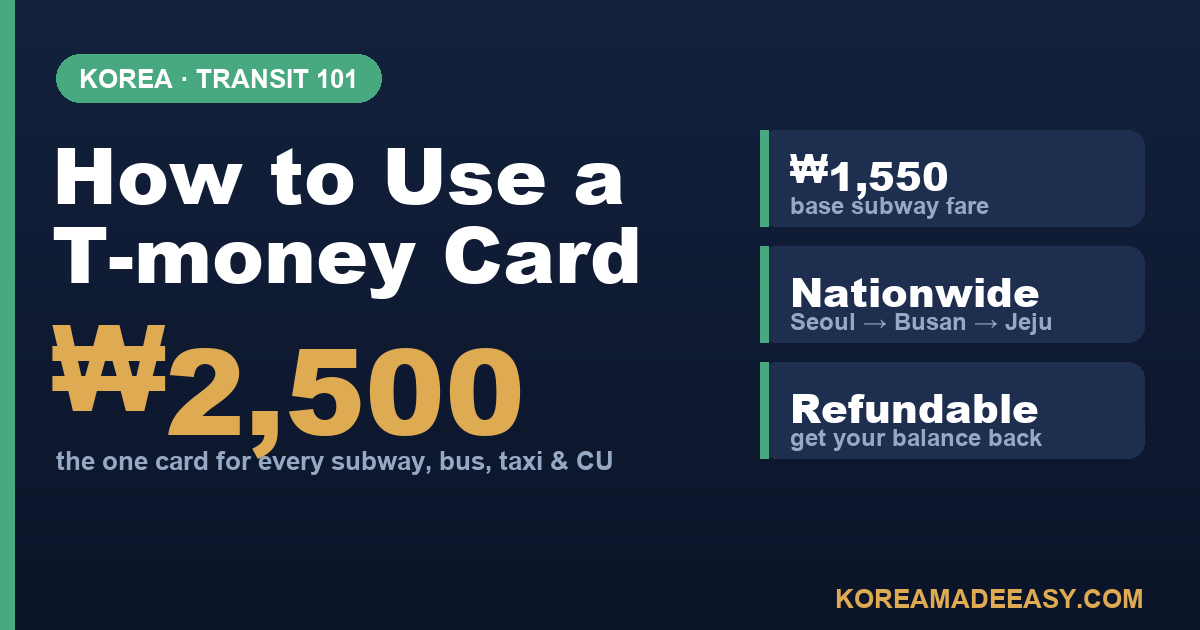
The payoff Frozen at a beige turnstile, unsure whether you grabbed T-money or Cashbee → tapping in and out like a local on a ₩2,500 card and cashing out the leftover balance before you fly home.
📈 Trend signal: buy t-money card / korea transit card for tourists — evergreen commercial-intent search 2026
The first genuinely Korean thing you’ll do after landing isn’t eating tteokbokki — it’s buying a small plastic card at a convenience store and tapping it against a beige turnstile. That card is a T-money card, and for the price of a coffee (~₩2,500) it becomes your subway ticket, bus fare, taxi payment and even your snack money at the CVS, in Seoul and across the whole country. Get it in your first thirty minutes and the rest of your trip runs on autopilot.
I’ve lived in Seoul for five years and tapped a T-money card in more times than I can count — and I still watch newly arrived friends lose real money on it. Not on the card itself, but on the traps around it: buying the wrong card, hitting a gate that won’t open, or flying home with ₩18,000 stranded on a card in a drawer. Here’s the honest, resident’s version of how the system actually works in 2026, so you skip all of that.
This post contains affiliate links. If you book through them, I may earn a small commission at no extra cost to you.
What a T-money card actually is (and why it’s not a bank card)
Coming from New York or London, you might expect a registered travel card tied to your name. T-money isn’t that. It’s stored-value e-cash — anonymous, no ID, no app required. You load won onto it, it counts down as you ride, and when it’s empty you top it up again. Nobody registers anything; you can hand it to a friend when you leave.
Three things surprise almost every first-timer, and each one costs money if you don’t know it:
- Korea runs two rival card systems that look identical. T-money and Cashbee are both sold at convenience stores, both work on transit, and a jet-lagged traveler can’t tell them apart. T-money is the default everyone means — say the word “T-money” out loud when you buy, so you don’t walk off with a Cashbee by mistake and then fight to reload it later.
- You tap IN and tap OUT. The subway charges by distance, so you scan on entry and exit. Forget the tap-out and the system assumes you rode to the end of the line and can penalize your next entry. Coming from a flat-fare city, this is the habit to build on day one.
- One card covers the whole country. People expect a Seoul-only card. Nope — the same T-money works on buses in Busan, Daegu and most Korean cities, in taxis, and as cash at convenience stores and many vending machines.
Where to buy one — starting at Incheon Airport
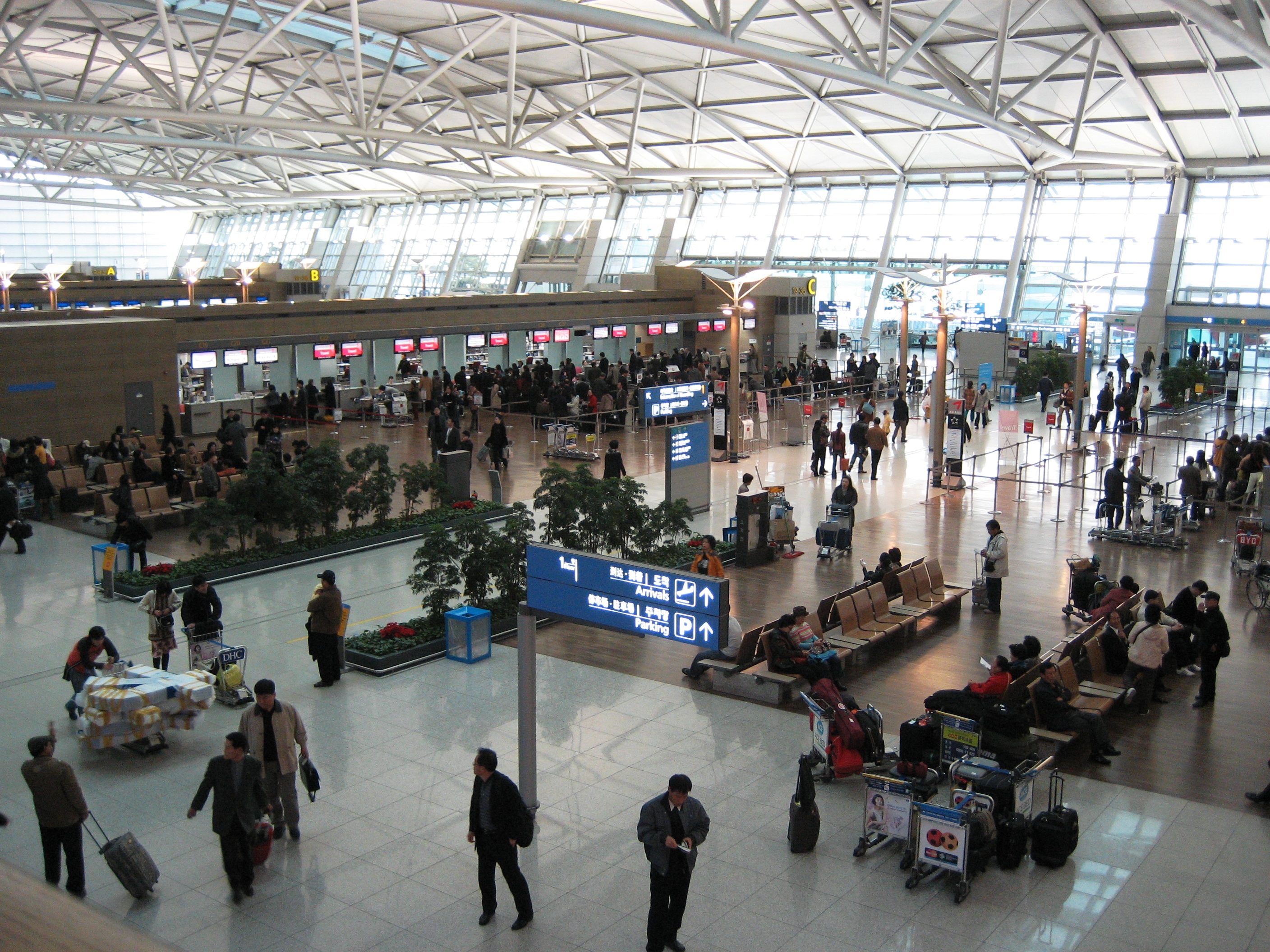
You can buy a T-money card at any GS25, CU or 7-Eleven (the three convenience-store chains that are on nearly every corner) and at subway stations. At Incheon Airport, the arrivals-floor convenience stores are your first stop:
- Terminal 2: the GS25 and 7-Eleven in the arrivals area sell T-money. Buy the card, load ₩20,000 in cash, and you’re ready to tap onto the AREX all-stop train or an Airport Limousine bus.
- Terminal 1: here’s a reported catch — travelers say the arrivals-floor CU stocks Cashbee, not T-money. If that’s the case when you land, don’t grab it blind; ask for T-money explicitly, or head to the Transit Center / tourism counter (B1), which is the reliable spot. (Treat this as “reportedly” and just ask at the counter — stock changes.)
The 2026 upgrade worth knowing: since March 17, 2026, Seoul Metro rolled out around 440 new kiosks across 273 stations on Lines 1–8 that accept foreign Visa / Mastercard / JCB / UnionPay / Amex and both sell and reload T-money. That’s a big deal, because the old station machines were cash-only for reloads. If you don’t have won yet, these kiosks are the newcomer’s friend.
The rookie-mistake cost table (what foreigners actually lose)
This is the part no competitor guide will show you, because it takes living here to notice. None of these are the card’s fault — they’re the small, avoidable ways first-timers burn won. Figures are ballpark, as of 2026, and worth a reconfirm on the day.
| Rookie mistake | Why it costs you | Ballpark hit |
|---|---|---|
| Paying with single-journey paper tickets all trip | A paper ticket costs more per ride and gives you no free 30-minute transfers | ~₩150+ per ride, more on every transfer |
| Tapping a plain T-money at the AREX Express gate | The non-stop Express needs its own ticket; the gate won’t open and you buy it anyway | wasted time + ~₩11,000 for the Express fare |
| Grabbing a Cashbee card thinking it’s T-money | It rides fine, but reload/refund points differ — you end up fighting the wrong system | confusion + dead-end reloads |
| Buying a Kakao / Sanrio character card for the looks | Same chip inside, cuter shell | +₩1,500–2,500 |
| Forgetting to tap out of the subway | Fare defaults high and your next entry can be blocked | a few hundred ₩ + a jammed gate |
| Flying home without refunding your balance | Leftover e-cash just sits there, gone | whatever you loaded |
| Refunding at a convenience store | A ₩500 processing fee applies (the card price is never refundable) | ₩500 |
The single biggest one is the AREX Express gate. There are two airport trains: the cheap all-stop train (a plain T-money tap opens it, ₩4,150–5,050 into Seoul) and the Express non-stop train (₩11,000, needs its own separate ticket). Tap T-money at the Express and you get turned back — first-timers do this constantly. I walk through both trains in detail in Incheon Airport to Seoul.
How to reload (charge) it
Two ways, and knowing which is which saves a frustrated ten minutes at a machine:
- Cash at any convenience store counter. Hand the clerk your card and cash and say “T-money charge.” This has always been cash only — the classic trap for travelers who assume they can top up on a foreign card.
- Foreign card at the new 2026 Seoul Metro kiosks (the 273-station rollout above). These are the exception that takes overseas cards for both buying and reloading.
Load ₩10,000–20,000 to start; that’s plenty for a first day of subway and bus. You’ll get a feel for the burn rate fast — a monthly transit budget in real won is broken down in the real cost of living in Seoul.
Getting your money back before you fly home
Leftover balance is refundable — the ₩2,500 card price is not. For balances up to ₩20,000, any convenience store will refund the remainder minus a ₩500 processing fee. Balances between roughly ₩20,000 and ₩50,000 go through a subway-station customer service center; anything larger, T-money HQ. The practical move: run your card close to empty on your last day, then cash out the rest at a CVS. Don’t leave ₩18,000 sitting in a card in your carry-on — that’s the most common quiet loss of all.
T-money vs the alternatives
T-money is the right answer for almost everyone, but it’s worth knowing what else exists. (All prices as of 2026 — reconfirm before you rely on them.)
| Card | Cost | Best for | 2026 catch |
|---|---|---|---|
| T-money | ₩2,500 + ₩1,550 base fare per ride | Everyone — flexible, nationwide, works in taxis & stores | Reloads are cash-only except at the new kiosks |
| Climate Card (기후동행카드) | Tourist passes from ₩5,000 (1-day) to ₩20,000 (7-day) | Heavy Seoul-only riders (5+ trips a day) | Seoul only; reportedly being phased out in 2026 — verify its current status on VisitKorea before buying |
| WOWPASS | Card + your loaded balance | Travelers who want to reload with a foreign card and spend it like a debit card | Slightly more setup; kiosk-based |
The WOWPASS-vs-T-money question trips up more first-timers than any other card decision here — the combo card keeps two separate balances, which is why people get a red gate light with a loaded card. For the definitive 4-way breakdown, check out our Korea Travel Cards Compared: T-Money vs Climate vs WOWPASS vs NAMANE Guide. | Korea Tour Card | T-money variant with tourist discounts | Visitors chasing attraction perks | Fewer places sell it |
On the Climate Card specifically: the Seoul Metropolitan Government now offers official short-term tourist passes (1-day to 5-day options). For the full pricing and ROI breakdown, see our Seoul Climate Card Tourist Guide or calculate your savings on our 4-in-1 Travel Tool.
Buy at the store, or pick one up pre-loaded?
If you’d rather not queue at the arrivals convenience store while jet-lagged, you can reserve a T-money card for airport pickup online — it costs slightly more than the store price, but you skip the fumbling-for-cash step on arrival, and some listings come pre-loaded or bundled with a duty-free voucher.
👉 Reserve a T-money card for airport pickup on Klook — pay online, grab it on arrival, skip the queue.
And if you already know you want the fast Express train (remember, T-money won’t open its gate), book that ticket ahead so you’re not sorting it out at the counter:
👉 Book an AREX Express train ticket on Klook — often cheaper than the counter, and you skip the line.
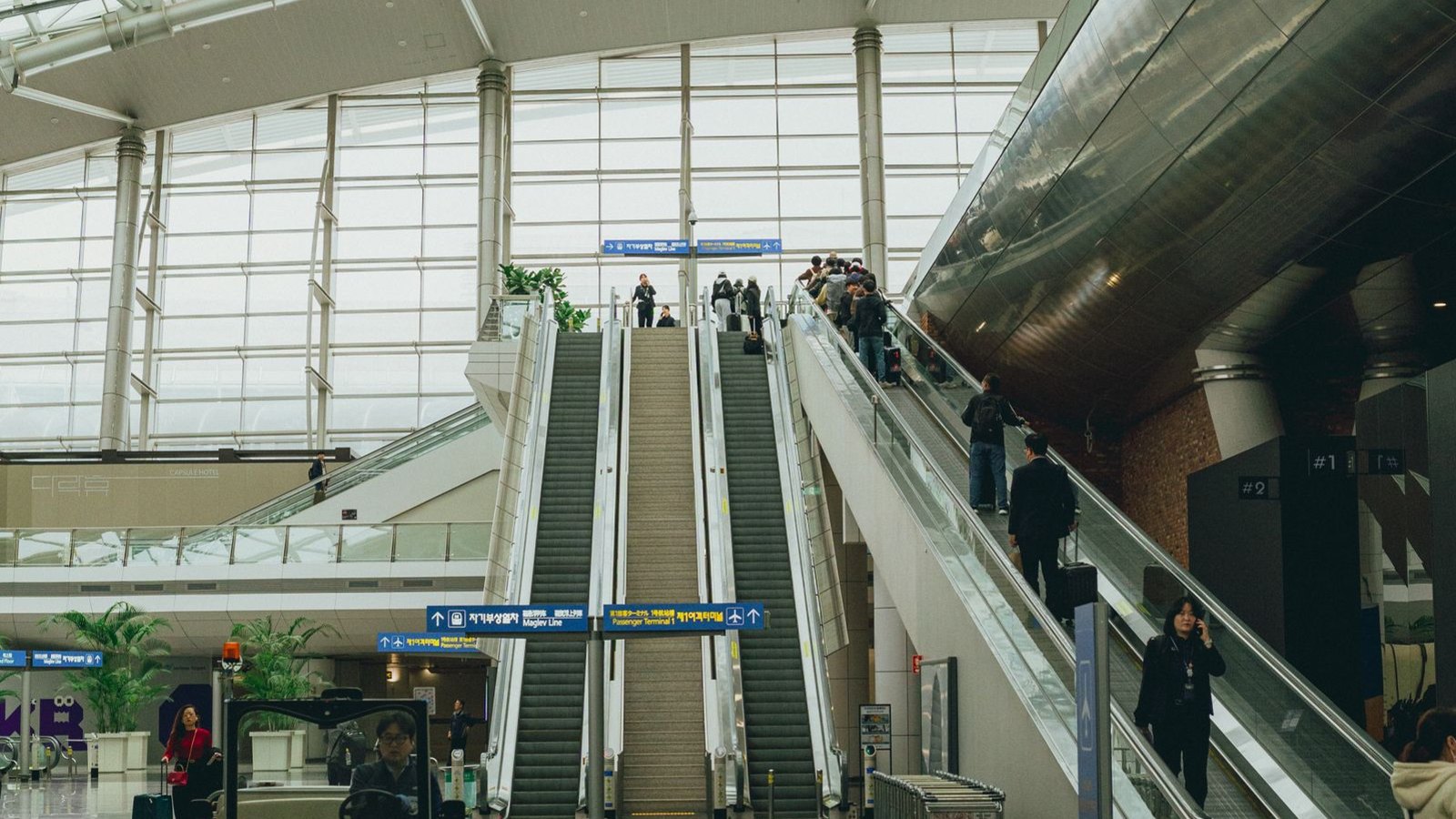
While you’re setting up at the airport, do the other two-minute job that saves your whole trip: get connected. Buy a T-money card and a local data plan in the same arrivals hall — my Korea eSIM comparison shows which one to pick, and both activate the moment you land. Once you’re mobile, where to stay in Seoul breaks the neighborhoods down by budget and vibe.
One card doesn’t cover everything, though. Ordering food, paying in an app, or splitting a bill runs through Korea’s own payment apps, and those hit an identity wall that T-money never does — here’s what actually works for a foreigner with Kakao Pay and Naver Pay.
FAQ
How much does a T-money card cost, and is it worth it? The blank card is about ₩2,500 (character designs run ₩4,000–5,000), and that card price is non-refundable. It’s absolutely worth it: tapping in costs less than a single paper ticket, you get free 30-minute transfers, and one card covers subways, buses, taxis and convenience stores nationwide. Unless you’re in Korea for a single afternoon, buy one.
Where can I buy a T-money card at Incheon Airport? At the arrivals-floor convenience stores — the GS25 and 7-Eleven in Terminal 2 sell it. In Terminal 1, ask explicitly for “T-money” (the CU there reportedly stocks Cashbee instead), or use the Transit Center / tourism counter on B1. Load ₩20,000 in cash and you’re ready to ride.
Can I use a T-money card on the airport train? On the AREX all-stop (commuter) train, yes — a plain tap works, roughly ₩4,150–5,050 into Seoul. On the AREX Express (non-stop) train, no — it needs its own separate ticket (~₩11,000) and the gate won’t open on a T-money tap. This is the number-one first-timer mistake.
How do I get my leftover balance refunded? For balances up to ₩20,000, any convenience store refunds the remainder minus a ₩500 fee. Higher balances go through a subway station customer service center. Run the card near empty on your last day and cash out the rest — don’t fly home leaving money on it.
Written by Yongwoo Chung, who has lived in Seoul for five years and taps a T-money card in most days. Prices and rules are dated 2026 and worth a quick reconfirm on VisitKorea before you travel, since Korea adjusts fares mid-year.
Planning Your Korea Trip? Don't Pay Full Price! ✨
Save $20–$50 per person with our verified reader perks & skip the long ticket booth queues:
AREX Incheon ↔ Seoul Express
Non-stop 43-min direct train with guaranteed reserved seats & free Wi-Fi. Scan your mobile QR straight at the gate!
Get 20% Off AREX Ticket →Korea Unlimited 5G eSIM
Skip the 30-min airport counter line. Scan the QR code to connect instantly for smooth Naver Maps navigation.
Get Instant eSIM QR (From $2.80) →WOWPASS Card (Pay + T-Money)
Pay anywhere in Korea with zero FX fees + subway card. Use code KOREAEASY for 0.5% cash top-up bonus!
Top Seoul Passes & Day Tours
Guaranteed entry for Lotte World, Nami Island tours, CIMER Spa, and Hanbok palace rentals with instant mobile vouchers.
Browse Top Seoul Deals →Sources
- https://onboardkorea.com/tmoney-card-guide/
- https://www.seoultourism.org/t-money-card-guide/
- https://www.koreaherald.com/article/10476645
- https://english.visitkorea.or.kr/svc/contents/contentsView.do?vcontsId=140663
- https://blog.trazy.com/korea-subway-t-money-card-guide/
Search-trend data from Google Trends (KR) and Naver DataLab. This article is independent commentary and is not affiliated with any broadcaster, agency, or the individuals mentioned.