Travel
KTX and SRT Merge on September 1: Fares Drop 10%, and Your Old App Won't Book It (2026)
The payoff Searching Korail, seeing 'sold out', and never learning that half of Korea's high-speed trains were sitting in a different company's app → one search, every train, about ₩5,400 cheaper on the Seoul–Busan run.
📈 Trend signal: Korail announced integrated operation for 2026-09-01; no English-language coverage exists as of mid-August
Some links in this guide are affiliate links. If you book through one I may earn a small commission at no extra cost to you.
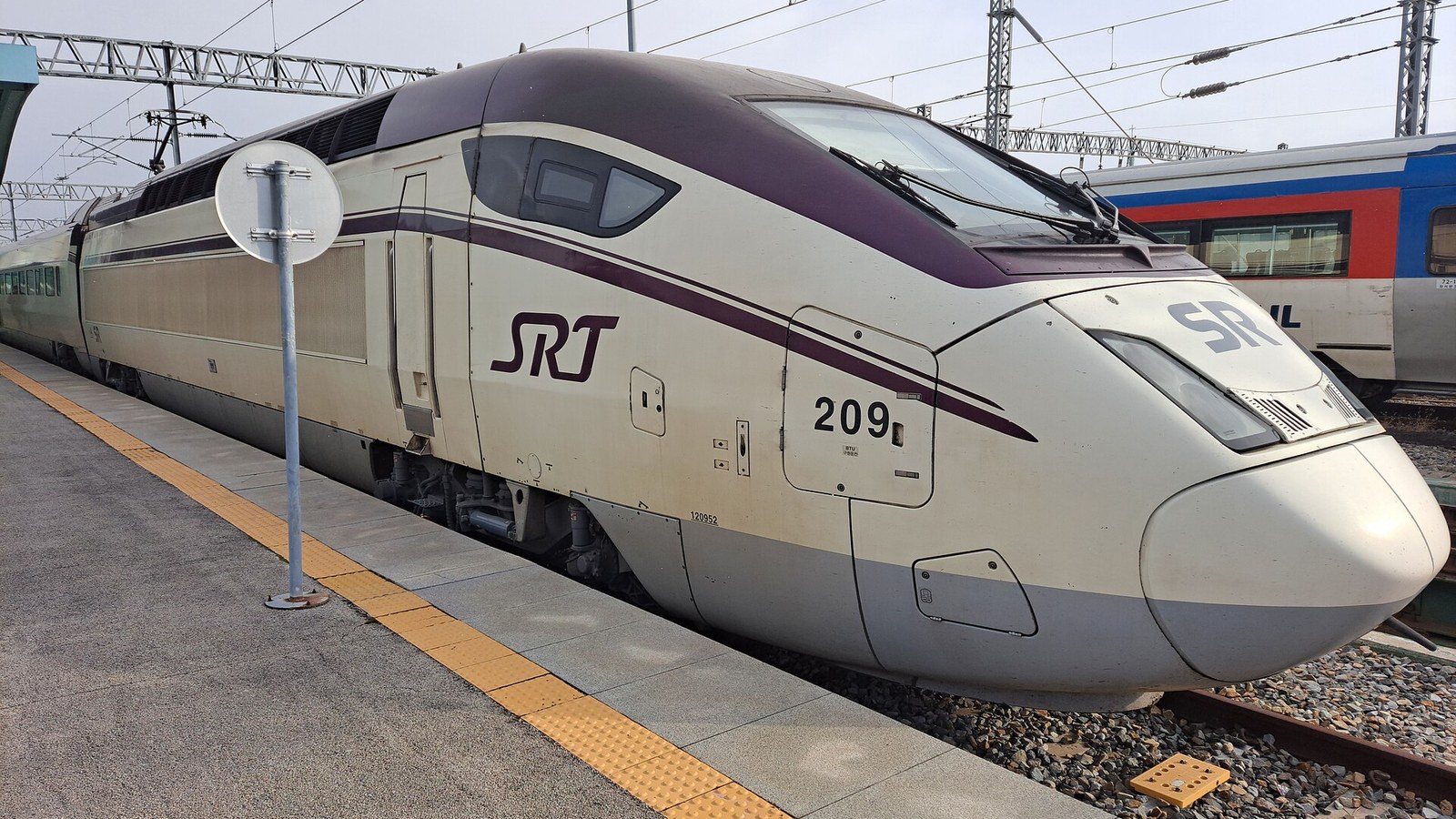
Header photo: an SRT trainset — the rolling stock operated as KTX-Sancheon from 1 September 2026. By Hajoon0102 via Wikimedia Commons, CC BY-SA 4.0.
For nine years Korea ran its high-speed network as two companies that pretended the other didn’t exist. Korail operated the KTX out of Seoul and Yongsan stations. A separate outfit, SR, ran the SRT out of Suseo in the south of the city. Same tracks for most of the journey, near-identical trains, completely separate ticketing — and no app that showed you both.
That ends on 1 September 2026. If you are travelling in Korea this autumn, three things change in ways that will affect what you pay and whether you get a seat. I’ve had to correct my own pages for this, so this is the version I wish had existed in English a month ago.
What actually changes
| Before | From 1 Sept 2026 | |
|---|---|---|
| Operators | Korail (KTX) and SR (SRT), separate companies | One integrated high-speed service |
| Seoul–Busan, standard | ₩59,800 | ₩54,400 |
| Yongsan–Gwangju Songjeong | ₩46,800 | ₩42,000 |
| Booking app | KorailTalk or the SRT app — never both | Korail+ (코레일+) for everything |
| SRT trainsets | Branded SRT | Operated as KTX-Sancheon |
| Weekday services | 379/day | 402/day |
| Weekend services | 431/day | 457/day |
The fare cut averages about 10% and is committed for three years, and roughly 116,000 extra seats a week come with it. For a visitor doing one Seoul–Busan round trip that’s around ₩10,800 back in your pocket, which is a decent dinner in Busan. For anyone building a multi-city itinerary it compounds.
The part that will actually catch you out
Here’s the operational detail buried in the Korean announcements, and it is the reason I’d rather you read this now than at 7am on a booking morning.
If your only account was an SRT account, you cannot book until you convert it. Existing Korail members were migrated to the integrated membership automatically. SR’s own members were not — they have to go through a conversion step on the SRT app or website, effectively a fresh registration, and the operators have been pushing people to do it early precisely because the Chuseok rush will jam it.
The practical rule: whichever app you have, open it and log in successfully today, not on the day you need a seat. KorailTalk updates into Korail+ in place, so most people just take the update and carry on.
And if you’d rather not fight a Korean identity check at all — a fair position, since the same verification wall breaks Kakao T for a lot of visitors — you can buy the ticket through a foreigner-facing reseller instead and skip the account entirely.
👉 Book a Seoul–Busan KTX seat on Klook — passport name, foreign card, confirmation by email. You pay a little over the counter fare for the convenience, and it’s the difference between having a seat and refreshing an app you can’t log into.
The stakes here are simple and worth stating: on the Chuseok sale morning, the popular Seoul–Busan departures go in minutes. An account you haven’t tested is the single most common reason people end up on a five-hour bus instead.
Why this matters more than a normal fare change
Two reasons, and neither is obvious from outside Korea.
First, it fixes a trap that cost visitors real money. Because SRT seats never appeared in Korail’s search, travellers routinely concluded a route was sold out having checked only half the trains — and then bought an expensive flight or a bus. I’ve watched that exact mistake play out repeatedly on travel forums. From September, one search covers the network.
Second, the timing collides with Chuseok. The holiday runs 24–26 September and holiday train tickets go on general sale at 7am on 7 September, covering trains that run 23–27 September. Those tickets are sold only through Korail+ and Korail’s dedicated holiday page. So the first serious stress test of the merged system is also the single busiest ticketing morning of the Korean year — six days after it goes live.
If your autumn trip touches that week, treat the app setup as part of the booking, not a preliminary.
What doesn’t change
Worth saying plainly, because merger coverage tends to over-promise.
- Suseo is still Suseo. The station doesn’t move, and it’s still awkward to reach from Incheon Airport — budget around 90 minutes and check the live route rather than assuming.
- Journey times are essentially the same. This is a commercial and ticketing merger, not new track. Seoul–Busan remains a bit over two and a half hours.
- Fares are still close to flat-rate. Korean high-speed rail barely discounts for advance booking, so the Western instinct to book early to save money still doesn’t apply. Booking early buys you a seat, not a lower price.
- Standing tickets still exist. Once seats sell out, 입석 (ipseok) standing tickets go on sale at a discount. On a two-hour run to Busan that’s a genuine option, not a last resort.
There are also some route additions worth knowing if your itinerary is unusual: new services routed via Seodaejeon and Gupo, larger 955-seat trainsets going into Suseo, and two more daily KTX-Eum services on the Seoul–Bujeon line down the middle of the country.
One thing I can’t tell you yet
Whether the Korail Pass will cover the former SRT trains after the merger. Logically it should — they’re being run as KTX-Sancheon — but I have not found an official statement either way, and I’m not going to guess on something that decides whether your pass works when you’re standing at a gate in Suseo.
If your plan depends on it, ask Korail directly before you buy. Our Korail Pass vs individual tickets breakdown walks through the maths either way — and note that a 10% fare cut makes individual tickets more competitive against the pass, since pass prices haven’t moved.
Make sure your driver drops you off at the correct terminal by checking our Incheon Airport Terminal 1 vs Terminal 2 airline guide.
FAQ
Do I need to download a new app? No. KorailTalk becomes Korail+ when you update it. What you may need is an account conversion — automatic if you were a Korail member, manual if you only had an SRT account.
Can I still use the SRT app? For trains running up to the end of August, yes. For services from 1 September onward, booking goes through Korail+ and Korail’s website.
Are SRT trains disappearing? No, only the branding. The same rolling stock keeps running the same Suseo routes, operated as KTX-Sancheon.
Is Seoul–Busan really cheaper now? Standard class falls from ₩59,800 to ₩54,400, a cut of ₩5,400 each way, as part of an average 10% reduction committed for three years. Premium and first-class fares fall on the same basis.
Does this help me get a Chuseok ticket? It helps — 116,000 extra seats a week and 26 more weekend services is real capacity. It does not make the 7am sale on 7 September relaxed. Have the app working and be logged in before it opens.
Will it be less confusing at the station? Yes, in the one way that matters: departures from Seoul, Yongsan and Suseo appear in the same search. You still have to go to the right station — a ticket from Suseo does not let you board at Seoul Station.
Planning around this? The Chuseok survival guide has the full holiday-ticket timetable, and if you’re chasing autumn colour, the foliage calendar tells you which week each region peaks.
Planning Your Korea Trip? Compare Your Options
Compare transport, mobile data, and attraction options. Prices and eligibility depend on your selected date and package.
AREX Incheon ↔ Seoul Express
Express train between Incheon Airport and Seoul Station. Follow the selected voucher’s seat reservation and redemption instructions.
Check AREX Express Tickets →Korea eSIM Options
Compare Korea eSIM search results. Check data allowance, supported network, device compatibility, activation, and speed limits.
Compare Korea eSIM Options →WOWPASS Card (Pay + T-Money)
Compare WOWPASS and T-money. Payment and transit balances are separate; check issuance, top-up, exchange, and withdrawal fees.
Read WOWPASS vs T-money →Top Seoul Passes & Day Tours
Browse general Seoul activity search results. This is not a guaranteed-entry pass or a fixed-discount offer; check each product’s inclusions.
Browse Seoul Activity Options →Sources
- https://www.kukinews.com/article/view/kuk202608050111
- https://www.seoul.co.kr/news/society/2026/08/03/20260803010001
- https://www.etoday.co.kr/news/view/2611238
- https://daily.hankooki.com/news/articleView.html?idxno=1396294
Search-trend data from Google Trends (KR) and Naver DataLab. This article is independent commentary and is not affiliated with any broadcaster, agency, or the individuals mentioned.