Food & Dining
Korean Cafe Etiquette 2026: The 1-Drink-Per-Person Rule, Ordering Flow & Manners in Seoul
The payoff Feeling awkward when a barista approaches your table in Korean → navigating Seoul's iconic cafe scene with total confidence, respecting local cafe etiquette like an insider.
Research context: Foreign tourist questions regarding Korean cafe 1-drink-per-person rules and etiquette
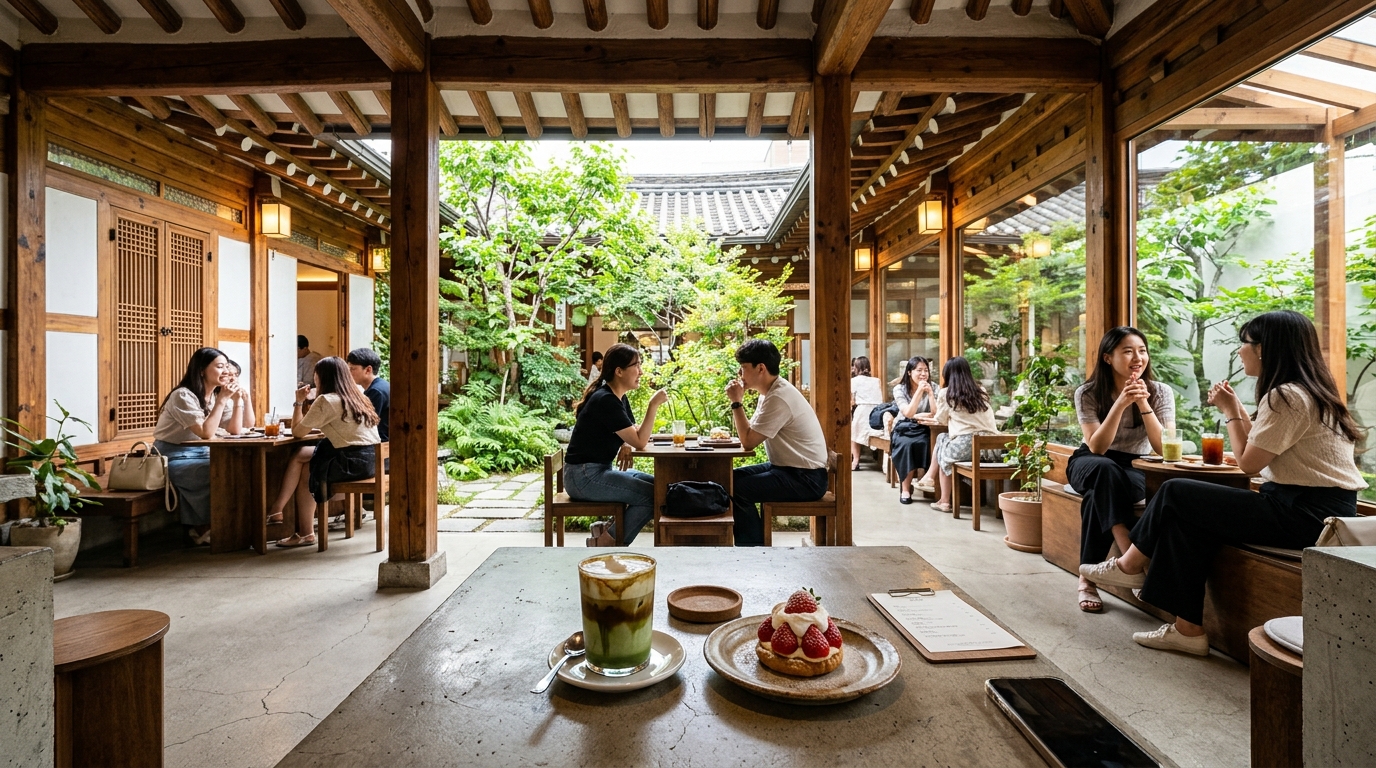
Seoul is widely recognized as the cafe capital of the world. From renovated industrial warehouses in Seongsu-dong to centuries-old wooden Hanok tea houses in Ikseon-dong and Bukchon, the city’s coffee aesthetics are unmatched.
However, behind the cinematic concrete interiors and artisanal Einspanners lie everyday hospitality customs that can surprise first-time international visitors.
If you’ve ever ordered a coffee and a slice of cake to share with a friend only to have the barista politely ask you to purchase another drink, you’ve encountered local cafe practices. Here is your complete 2026 survival guide to navigating Seoul’s cafe etiquette effortlessly.
1. The Common Guideline: 1 Person, 1 Drink (1인 1음료)
In many independent, boutique, or themed cafes in South Korea, you will see a small sign on the counter that reads: 1인 1음료 (One Drink Per Person).
Why does this rule exist?
Unlike takeout-heavy coffee shops in some countries, Korean cafes often serve as neighborhood gathering spaces where patrons sit for an hour or two to chat, take photos, or relax. Because prime retail rents in districts like Gangnam, Hongdae, and Seongsu are steep, many cafes use the 1-drink-per-person policy to keep table capacity sustainable.
Does a cake or pastry count as an order?
In many boutique cafes, signs specify that pastries do not count toward the beverage minimum. Even if you buy a premium slice of cheesecake and one latte to share between two people, staff may politely explain that each seated guest is requested to order a drink (such as a tea, ade, juice, or decaf coffee). However, policies vary by establishment—some dessert-focused bakeries do treat shared specialty cakes as qualifying orders, so always look for a sign at the register.
2. Working on a Laptop or Studying?
Laptop policies, power outlets, and seating limits vary widely across Seoul cafes—many boutique spots post guidelines or limit laptops during peak hours. For how to verify Wi-Fi, find outlets, and navigate remote work etiquette branch-by-branch, read our dedicated Seoul Laptop Cafe Guide.
3. The Ordering Flow & Vibrating Pager (진동벨)
When you order at a counter in Korea:
- Takeout vs In-Store (매장 or 포장): By Korean environmental law, if you select “In-Store” (매장), your beverage MUST be served in a reusable glass or ceramic mug. You cannot receive a disposable plastic cup if you are sitting at a table.
- The Vibrating Pager (진동벨): You will be handed a small plastic disc. Find a table and wait. When your order is prepared, the pager will flash red and vibrate vigorously.
- Counter Pickup: Walk up to the pickup counter (픽업대), hand the buzzer back to the staff, and take your tray.
- Self-Service Water & Napkins: Water and napkins are located at the condiment bar (서비스 테이블) near the pickup zone.
4. Returning Your Tray (퇴식구 / 반납대)
In Western fast-casual settings, leaving dirty dishes on the table for busboys is common. In South Korea:
- Always return your tray: When leaving, carry your tray, cups, and cutlery back to the return counter marked 반납대 (Return) or 퇴식구.
- Separate Trash: Place paper napkins into the waste bin and set cups/plates neatly on the counter.
5. Top 3 Seoul Cafe Neighborhoods to Explore
If you are building your Seoul itinerary, make sure to explore these three distinct cafe hubs:
☕ Top Seoul Cafe Hotspots
- Seongsu-dong (The Brooklyn of Seoul): Industrial roasteries, designer pop-up cafes, and viral pastry boutiques. Read our Seongsu-dong Cafe Street & Pop-Up Guide.
- Ikseon-dong & Bukchon: Traditional wooden Hanok cafes serving black sesame Einspanners and traditional herbal teas. Pair this with a stay in our Bukchon Hanok Stay Guide.
- Yeonnam-dong (Near Hongdae): Cozy European-style vintage cafes, floral garden terraces, and pet-friendly micro-bakeries.
While enjoying riverside evening views, grab a warm meal using the automated induction machines described in our Han River ramen bar cooking guide.
Frequently Asked Questions (FAQ)
What if I don’t drink caffeine?
All Korean cafes offer non-caffeinated options: seasonal fruit ades (grapefruit/자몽, green grape/청포도), artisanal milk teas, chamomile/peppermint teas, and decaf coffee (디카페인).
Can I bring outside food or drinks into a cafe?
Generally, outside food and beverages (외부 음식) are not permitted, with common exceptions made for infant formula or baby food. Some outdoor courtyard spots or market kiosks may be flexible, but it is best to check with staff before consuming outside snacks.
Are tipping jars common in Korean cafes?
No. There is zero tipping culture in Korea. The price shown on the menu is the exact total amount including 10% VAT tax.
Written by Yongwoo, founder of Korea Made Easy. Based on local Seoul cafe operations and hospitality customs.
Sources
- https://stdict.korean.go.kr (National Institute of Korean Language - Cafe Culture Entries)
- https://english.visitkorea.or.kr (Seoul Specialty Cafe & Hanok Tea House Guide 2026)
This is independent guidance, not an official operator or government publication. Evidence and check dates vary by article. See our editorial and corrections policy for the distinction between source checks, personal visits and planning advice.