Travel
How to Call a Taxi in Korea Without a Local Number: K.ride vs Uber vs Kakao T (2026)
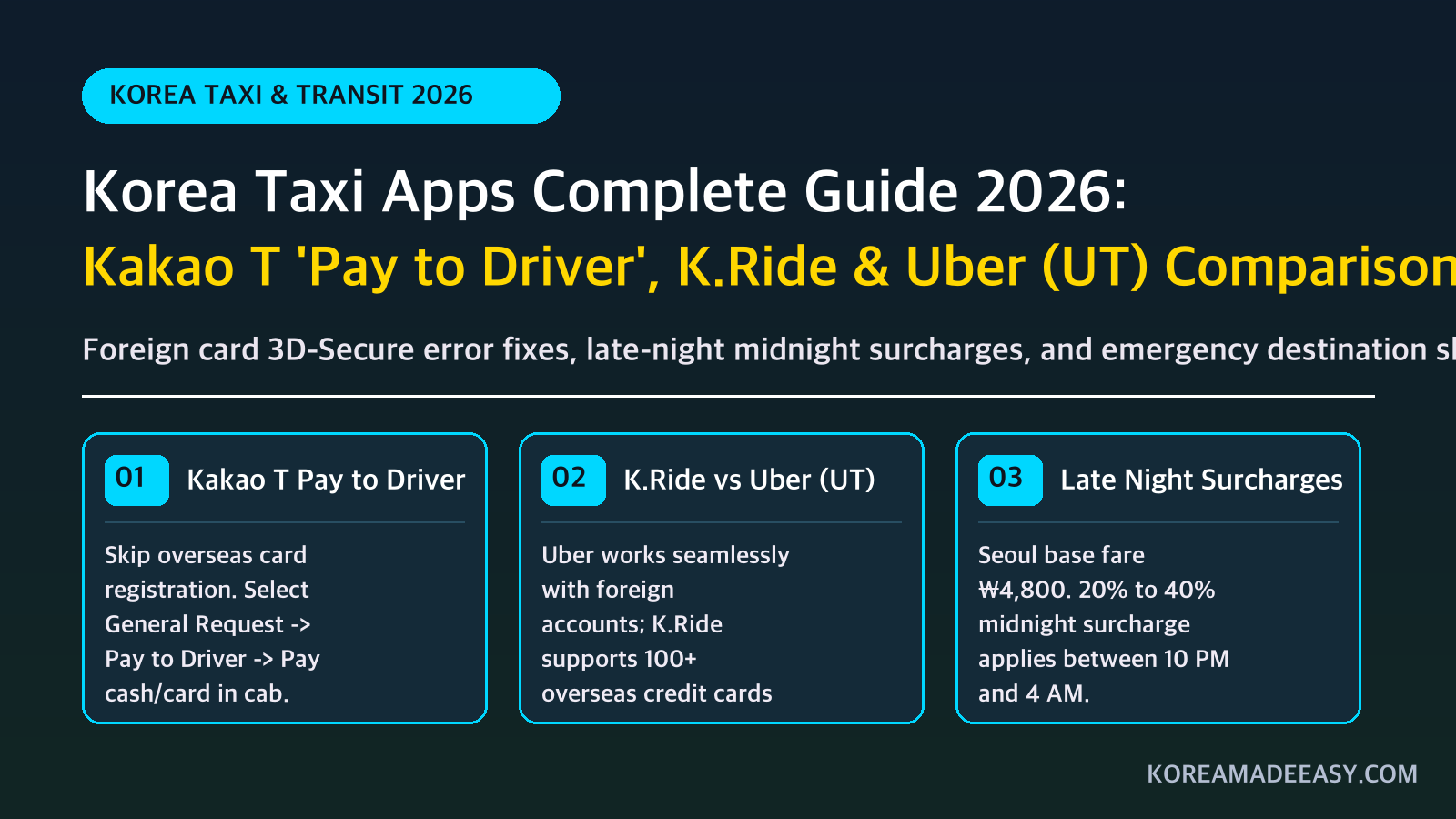
The payoff Stranded on late-night Seoul streets with Kakao T rejecting your foreign card → effortlessly summoning metered standard sedans via K.ride or Uber in 3 minutes.
If you have ever tried downloading the standard Kakao T app right after stepping off your flight at Incheon Airport, you likely hit the infamous wall: authentication loops, Korean-only identity verifications, or overseas Visa cards getting declined at checkout.
As someone living in Seoul who regularly helps foreign friends navigate the city after midnight when the subway shuts down, I have seen dozens of travelers get stranded in Hongdae or pay far more than the metered fare to aggressive airport touts.
Here is the exact guide on how taxi apps in South Korea actually work in 2026, which app you should use, and how to ensure you never get scammed.
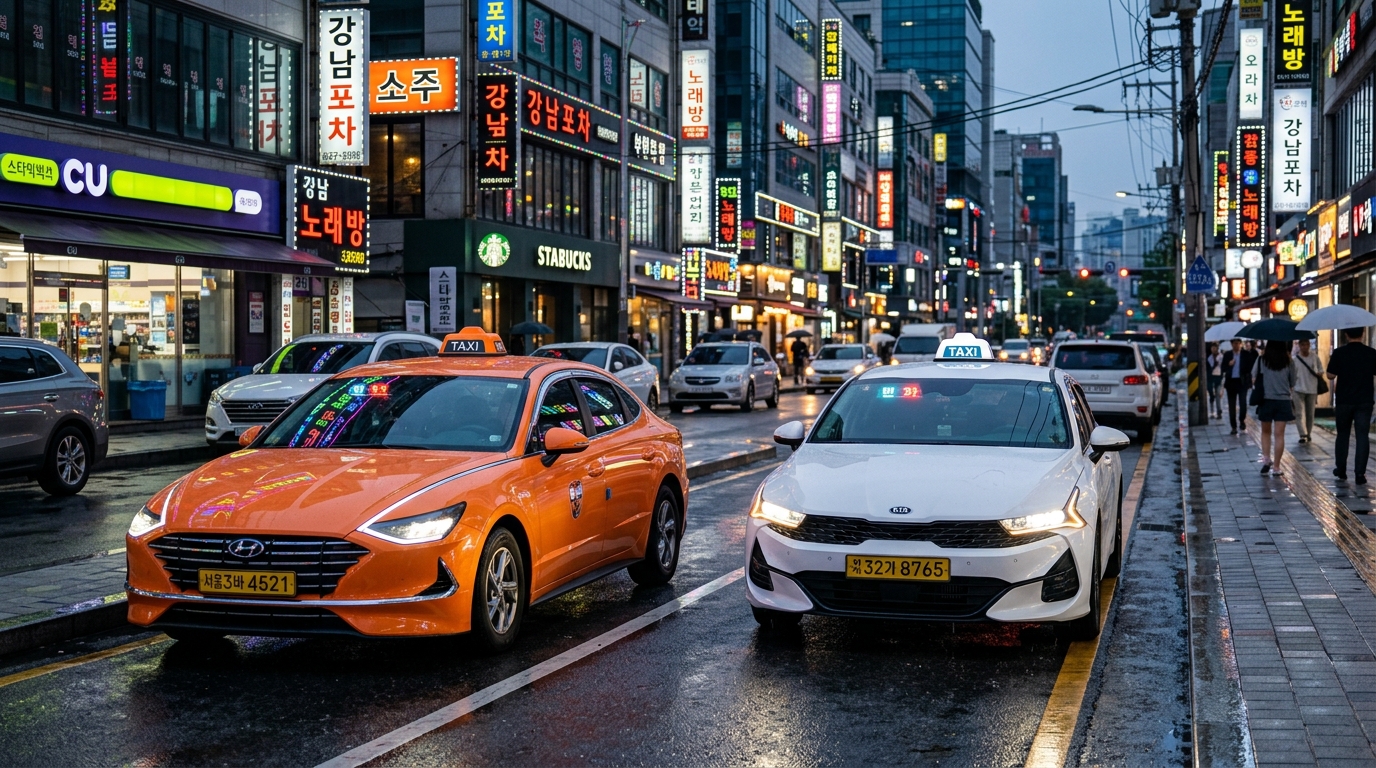
Standard Seoul orange and white metered taxis lined up along a busy downtown street at dusk.
1. The App Showdown: K.ride vs Uber vs Kakao T
Foreign tourists have three primary app options in Seoul. Here is how they compare based on their published features:
| Feature | K.ride (Kakao Global) | Uber (UT Korea) | Standard Kakao T |
|---|---|---|---|
| English Interface | Native & Intuitive | Native | Basic |
| Foreign Phone Signup | Designed for foreign numbers | Existing Global Account | Sometimes Glitchy |
| Foreign Credit Cards | Designed for foreign cards (check the app) | Linked in Home Country | Frequently Fails (see Kakao Taxi foreign card fix) |
| Driver Availability | Kakao driver network | Better in central Seoul | Kakao driver network |
| Automatic In-App Pay | Yes (Auto-charged) | Yes (Auto-charged) | Usually “Pay Driver” only |
| Best For | Late-night outer districts | Seamless Western travelers | Domestic residents |
Option A: Uber (The Easiest “Zero Setup” Choice)
If you already use Uber in the US, UK, Australia, Europe, or Southeast Asia, do not delete it.
When you open Uber in South Korea, it automatically operates through the UT (Uber-TMap) joint venture. The interface looks identical to your home country, calls licensed Korean metered taxis, and charges your linked card automatically (your card issuer may still add foreign-transaction fees).
Local Insight: Uber works wonderfully in tourist hubs like Myeongdong, Gangnam, Hongdae, Itaewon, and Incheon Airport. However, in residential neighborhoods late at night you may find fewer Uber cars available than on the Kakao network, so have a second app ready.
Option B: K.ride (The Official Global Kakao Solution)
To solve the foreigner payment barrier, Kakao Mobility launched K.ride—a dedicated app tailored for international travelers.
- Aimed at visitors, with multiple language options (check the app store listing for the current list).
- Designed to accept foreign phone numbers and foreign cards; check the app for the payment methods it currently supports.
- Connects to Kakao’s taxi driver network, which is large in Seoul.
2. Understanding Seoul Taxi Types & Colors
When hailing a taxi from the street, look at the color and the roof light:
🚖 Seoul Taxi Color & Pricing Breakdown (2026)
- [Orange / White / Silver] ➔ Standard Sedan (일반)
- Base Fare: ₩4,800 for the first 1.6 km
- Best for: 1–4 passengers, daily budget city travel
- [Black with Yellow Stripe] ➔ Deluxe Taxi (모범 Mobeom)
- Base Fare: ₩7,000 for the first 3.0 km
- Best for: More comfortable sedans and more experienced drivers (English ability varies). Night surcharge is 20% from 22:00 to 04:00 per the Seoul city fare table.
- [Black Van / Staria] ➔ Jumbo Taxi (대형) & Venti
- Base Fare: ₩7,000 for the first 3.0 km
- Best for: Larger groups with several big suitcases (check seat and luggage capacity with the driver or operator). (For airport pickup pricing and pre-booking fixed rates, see our Incheon Airport Private Van & Jumbo Taxi Transfer Guide 2026.)
Street Hailing & The “Red Roof Light” Rule
In Korea, the dashboard/roof light indicator works opposite to some Western cities:
- Red Text “빈차” (Bin-cha / Empty) = Available to hail!
- Green/Blue Text “예약” (Ye-yak / Reserved) = Called via app, do not wave down.
- No Light / Extinguished = Occupied by a passenger.
3. Real Seoul Taxi Fares & Midnight Surcharges
Taxis in Korea are regulated by city governments and strictly metered:
- Base Daytime Rate (04:00 – 22:00): ₩4,800 for the first 1.6 km.
- Distance Surcharge: ₩100 per 131 meters.
- Time Surcharge: a time-based charge applies when the taxi is moving slowly or stopped in traffic.
Midnight Surcharge (야간 할증)
If you party in Hongdae or Itaewon past 10:00 PM, tiered late-night surcharges apply:
- 22:00 – 23:00: +20% surcharge (Base fare ₩5,800)
- 23:00 – 02:00 (Peak Midnight): +40% surcharge (Base fare ₩6,700)
- 02:00 – 04:00: +20% surcharge (Base fare ₩5,800)
Estimated Ride Costs (Daytime Normal Traffic):
- Myeongdong ➔ Hongdae (about 7 km): roughly ₩12,000 – ₩14,000 (my estimate; varies with traffic)
- Gangnam Station ➔ Myeongdong (about 9 km): roughly ₩15,000 – ₩18,000 (my estimate; varies with traffic)
- Incheon Airport ➔ Myeongdong: roughly ₩70,000 – ₩100,000 on the meter, varying with traffic, time of day, and vehicle, with the expressway toll paid on top. Check the meter, or the operator’s quote if pre-booked. For reference, Seoul city’s official table (dated February 2023) lists international-taxi fares from the airport of ₩70,000–₩95,000 for sedans and ₩100,000–₩140,000 for SUV/van/deluxe, depending on the zone.
4. How to Avoid Airport Van Scams
Most Seoul taxi drivers just run the meter, but the most common trap targets tired arrivals at Incheon Airport:
The “Call Van” Trap to Avoid: When you exit customs into the public arrivals hall (1F), unauthorized drivers wearing badges will approach asking, “Where are you going? Luxury taxi? Special flat price!”
Do not agree to an unsolicited flat price. Walk to the official taxi stand, or pre-book a service where the price is shown in writing, and compare any quote with the fare ranges above.
The Correct Way to Take an Airport Taxi:
- Walk straight out the terminal doors to the ground transportation curb.
- Follow the overhead signs to the Official Taxi Stands (stand numbers differ by terminal and can change; the Incheon Airport Corporation site, airport.kr, lists the current ones).
- The attendant or automated kiosk will guide you into the next metered car in line.
- If traveling during rush hour with heavy luggage, the AREX Express Train to Seoul Station (about 43 minutes from Terminal 1; check AREX for the current fare) is usually the more predictable option.
5. Helpful Showcards for Taxi Drivers
Most Korean drivers over 50 speak limited English. Keep these phrases ready or save them on your phone:
Essential Taxi Showcard 1: 기사님, 미터기 켜고 가주세요. (Gisanim, miteogi kyeogo gajuseyo.) ➔ “Driver, please turn on the meter.”
Essential Taxi Showcard 2: 이 주소로 가주세요: [네이버 지도 한글 주소] (I jusoro gajuseyo: …) ➔ “Please take me to this address.” (Always show the Korean Hangul address from Naver Map, not Romanized English).
Essential Taxi Showcard 3: 여기서 내려주세요. 카드로 계산할게요. (Yeogiseo naeryeojuseyo. Kadeuro gyesanhalgeyo.) ➔ “Please drop me off here. I will pay by credit card.”
To book the high-speed line operating out of Gangnam’s Suseo terminal, see our detailed Korea SRT train booking guide for foreign cardholders.
FAQ
Does Uber work in South Korea for international tourists?
Yes, the Uber app generally works in major Korean cities through the local UT network and charges your linked card. Availability varies by area and time, so check the app where you are.
Can I pay Seoul taxis with T-money or WOWPASS?
Most Seoul taxis have a card terminal and many accept transit cards such as T-money, but foreign-card acceptance can fail on individual terminals. Carry a backup payment method and some cash, and check whether your WOWPASS or other prepaid card works before relying on it.
Is tipping expected for taxi drivers in Korea?
No. Tipping is not part of Korean culture. You pay the exact amount displayed on the dashboard meter. Rounding up spare coins (e.g., leaving ₩200 change) is optional but never expected.
What should I do if I leave a phone or bag in a Seoul taxi?
If you called via K.ride or Uber, open your ride history in the app and look for a lost-item or contact-support option right away. If you hailed from the street and paid by card or T-money, keep your receipt and card record; the receipt may show the taxi’s license plate number and company details, which help the company or police trace the car. For a complete step-by-step recovery walkthrough, see our Korea Lost & Found Guide (Lost112).
Sources checked
- Seoul Metropolitan Government — Taxi — official Seoul taxi base fares, night surcharges, and airport zone fares.
- Incheon International Airport — Taxis — official airport taxi stand and ground transport guidance.
- K.ride (Kakao Mobility) — official global taxi-hailing app portal for foreign visitors.
Sources
- https://english.seoul.go.kr/policy/transportation/modes-of-transport/taxi/
- https://www.airport.kr/ap_en/1515/subview.do
- https://kride.kakaomobility.com/
This is independent guidance, not an official operator or government publication. Evidence and check dates vary by article. See our editorial and corrections policy for the distinction between source checks, personal visits and planning advice.