K-Beauty & Wellness
Korea Personal Color Analysis in Seoul (2026): How to Choose a Studio, What to Ask & Price Checks
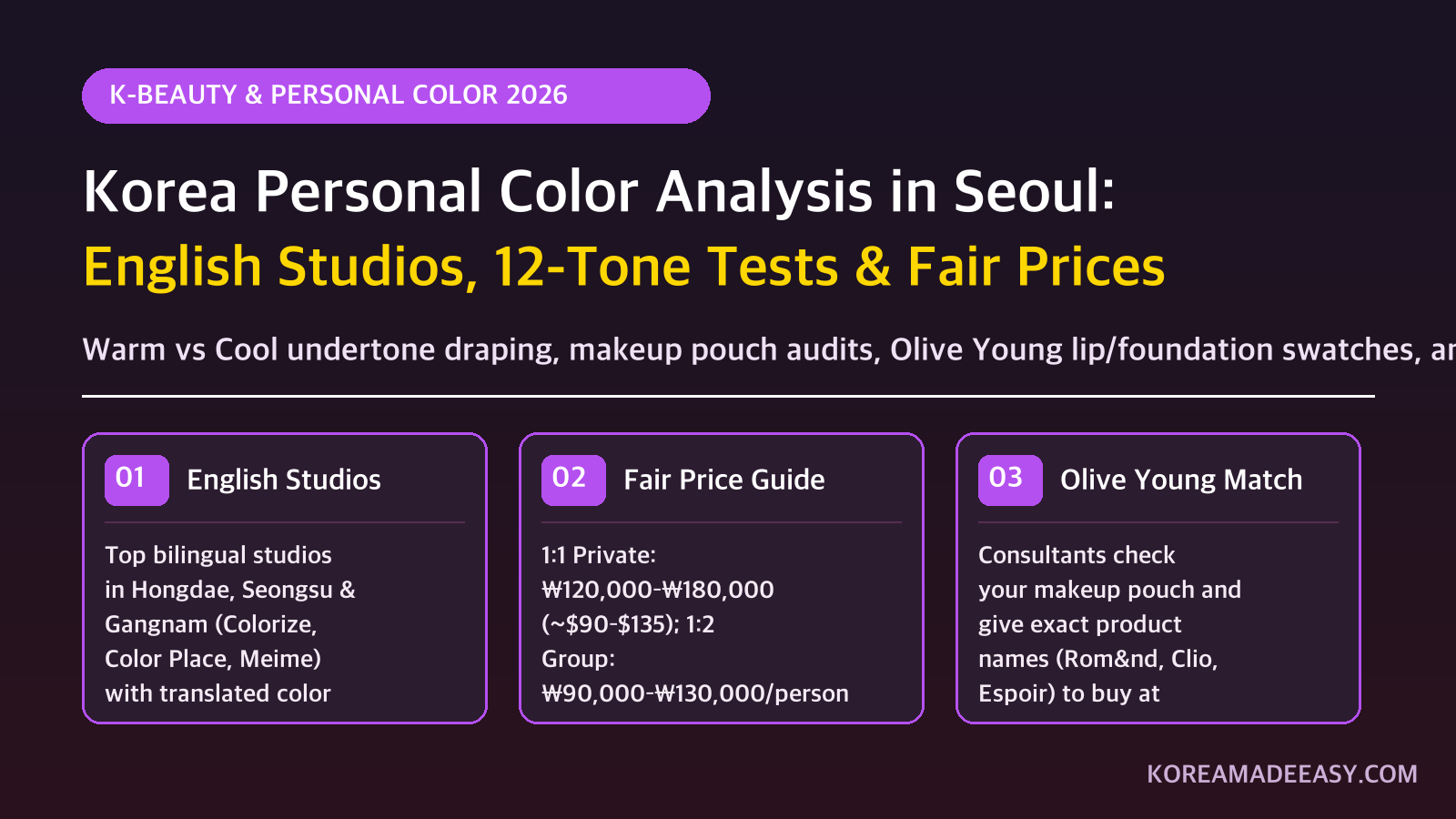
The payoff Confused by TikTok color filters and wearing unflattering foundation shades → Walking out with a clear idea of your tones and a shopping list to test at Olive Young.
Research context: K-Beauty Personal Color Tourism & diagnostic styles that vary by Korean studio (no single official standard found)
If you have watched any K-beauty transformation vlog over the past couple of years, you have seen the familiar visual:
A customer sits in front of a bright studio mirror while a color consultant drapes colorful fabric swatches (Draping, 드레이핑) beneath their chin, and the face seems to change with each color.
In South Korea, Personal Color Analysis (퍼스널 컬러 진단) is a popular service, and many visitors book one on a Seoul trip. It can be hard to book as an international visitor:
- “How do I find a studio with English consultations?”
- “What is a fair price, and what should be included?”
- “How do I translate my results into real Olive Young makeup purchases?”
Here is a practical guide to what to ask a studio about its system, how to choose and vet a studio in Seoul, and how to use your results. I don’t list studio names or price ranges here because I can’t verify them against an official source, and studios change prices and staff often.
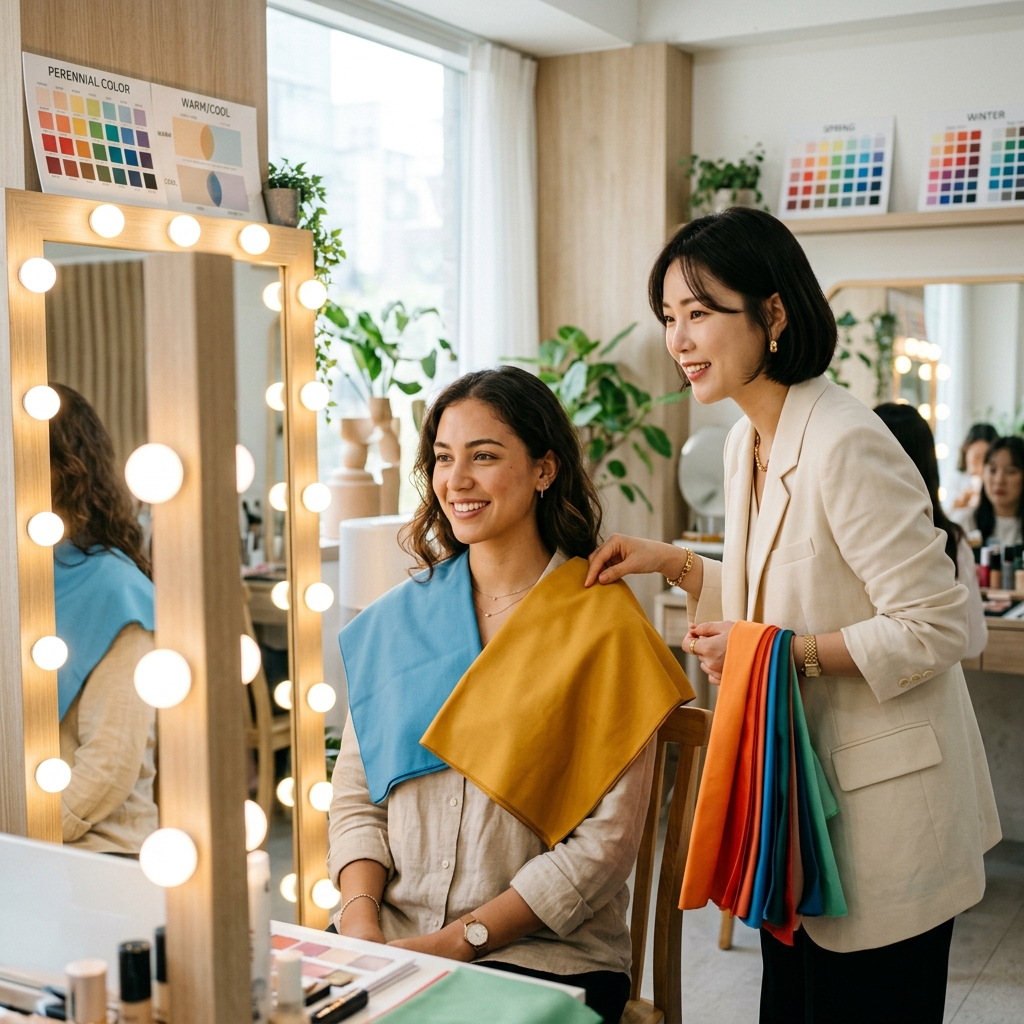
A client receiving a 1-on-1 color draping test in a Seoul studio, where the consultant holds fabric swatches near the face.
1. Which Color System Does the Studio Use?
Western color analysis often stops at four basic seasons: Spring, Summer, Autumn, and Winter. Studios in Korea often describe more detailed categories (you will see “12-tone” and similar labels on studio pages), but studios use different color-analysis systems, and I haven’t found one official standard. The same label can mean different things at different studios, so don’t assume one studio’s result will match another’s.
Before you book, ask the studio:
- Which system do you use, and how many categories does it have? Ask them to name the categories and explain what each one means in plain English.
- What does the result say about me? For example, whether it is about warm vs cool, lighter vs darker, softer vs brighter, or a mix. Shops use these words in different ways.
- Can I see the swatch colors that belong to my result? A printed or photographed swatch card is easier to take shopping than a label alone.
Treat any result as a starting point for browsing, and test shades in the store, since the same shade looks different on different skin and under different lighting.
2. How to Judge a Studio’s Price
Prices vary a lot between studios and change often, so I can’t give you a reliable fair-price range. Instead, before you book, ask these questions and compare two or three studios:
| What to Ask | Why It Matters |
|---|---|
| Total price in won, tax included? | Avoids a surprise at payment. |
| How long is the session? | A longer session can justify a higher price. |
| Is it 1:1, 1:2 or a group? | Ask whether group pricing is available, and how much individual draping time each person gets. |
| What do I get at the end? | Ask whether you get a results sheet, photos, swatch card or product list, and in which language. |
| Does the price include makeup advice or only the diagnosis? | Ask whether add-ons are charged separately. |
| What is the cancellation and deposit policy? | Ask whether a deposit is required when you book. |
💡 Tip: If a studio won’t tell you the price or what’s included before you book, treat that as a red flag and try another studio.
3. How to Find and Vet an English-Friendly Studio
I can’t verify which studios have fluent English consultants today, so here is how I would check:
- Search maps and social media: Search “personal color Seoul English” on Naver Map, Google Maps and Instagram. Studios aimed at visitors often say so in their profile.
- Read recent reviews: Look for reviews from the last few months from non-Korean visitors, mentioning English or translated results.
- Message before you book: Ask in English whether the consultant speaks English or uses a translator or translated sheet, and note how quickly and clearly they reply.
- Check what you receive: Ask if the results are in English or just Korean, and whether photos are included.
- Compare locations: Hongdae and Gangnam are common areas for visitors, but studios are spread around Seoul. Pick one near where you’re staying.
If something goes wrong with a booking, the 1330 Korea Travel Helpline offers a free online call or chat option for travellers.
4. What Typically Happens During a Session?
Sessions vary by studio and length, and I could not find an official description of what a session includes. Studios describe parts like the ones below, so ask which ones are in your booking:
🎯 Stage 1: Skin, Eye & Hair Baseline Check
You sit in front of the mirror. Ask before you go whether you should arrive without makeup or colored contact lenses. The consultant may look at your skin tone, eye color and hair color.
🎯 Stage 2: Fabric Draping
The consultant drapes a cape over your clothes, may cover your hair, and holds fabric swatches near your face to see which colors suit you best and which look less flattering.
🎯 Stage 3: Jewelry & Hair Color Testing
Ask whether metal tones (gold, silver, rose gold) or hair colors are tested too, which can help before a Korean Hair Salon visit.
🎯 Stage 4: Makeup Review
Ask whether the consultant will review the makeup you brought and suggest shades.
🎯 Stage 5: Results and Shopping Suggestions
Ask whether you get a printed or digital results sheet or swatch card, and whether product suggestions are included, before you book; then use it at Olive Young or Musinsa.
5. Emergency Korean Showcards: Save to Your Phone
Show these bilingual phrases to your color consultant or Olive Young staff:
📱 Showcard 1: Requesting an English Color Swatch Summary Card
“진단 결과지와 추천 화장품 목록을 영문(또는 사진)으로 받아볼 수 있을까요?” (Jindan gyeolgwajiwa chucheon hwajangpum mongnok-eul yeongmun [ttoneun sajin] euro badabol su isseulkkayo?)
💬 Translation: “Could I please receive the diagnostic result chart and recommended makeup product list in English (or photo format)?”
📱 Showcard 2: Asking Olive Young Staff for Products Matching Your Season
“제가 ‘[봄 웜 / 여름 쿨 / 가을 웜 / 겨울 쿨]’ 톤인데, 여기에 맞는 립틴트와 쿠션 추천해 주세요.” (Jega ‘[Bom Warm / Yeoreum Cool / Gaeul Warm / Gyeoul Cool]’ ton-inde, yeogie manneun riptinteuwa kusyeon chucheonhae juseyo.)
💬 Translation: “My personal color is [Spring Warm / Summer Cool / Autumn Warm / Winter Cool]. Please recommend a lip tint and cushion foundation that matches my season.”
For skin-clinic costs and how to avoid tourist surcharges, see our Seoul skin clinic guide for foreigners.
6. Frequently Asked Questions (FAQ)
Q1: Should I wear makeup to my personal color test?
Ask the studio whether you should arrive without makeup or colored contact lenses, and whether it provides cleansing supplies. Requirements differ by studio, so confirm when you book.
Q2: How far in advance do I need to book?
Popular studios can fill up, especially on weekends, so book as early as you can. Booking methods differ by studio; common ones are Instagram messages, Naver Booking or a booking platform. If you’re booking late, ask about cancellation slots.
Q3: Can men get personal color analysis in Seoul?
Some studios may take male clients or offer sessions focused on suit, tie, glasses or hair colors. Check the studio’s profile or ask before you book.
Q4: Do studios accept foreign cards?
Many Korean businesses accept foreign cards, but VisitKorea notes some stores may not. Ask which payment methods the studio accepts when you book, and keep some cash as a backup.
Official sources to check
Prices, studios and booking details change. Before you rely on any figure, confirm it directly:
- Each studio’s own profile or booking page — price, language support, deposit and cancellation rules. I could not find an official price list or standard for personal color analysis.
- VisitKorea: 1330 Korea Travel Helpline — free call or chat option for travellers.
- VisitKorea: Korean currency and cards — card acceptance notes.
Sources
- https://english.visitkorea.or.kr/enu/TRV/TV_ENG_3_1.jsp
- https://english.visitkorea.or.kr/svc/contents/contentsView.do?vcontsId=140040
This is independent guidance, not an official operator or government publication. Evidence and check dates vary by article. See our editorial and corrections policy for the distinction between source checks, personal visits and planning advice.
Late-Night & Sunday Pharmacies in Korea: Emergency Medicine & 24/7 Translation Guide (2026)
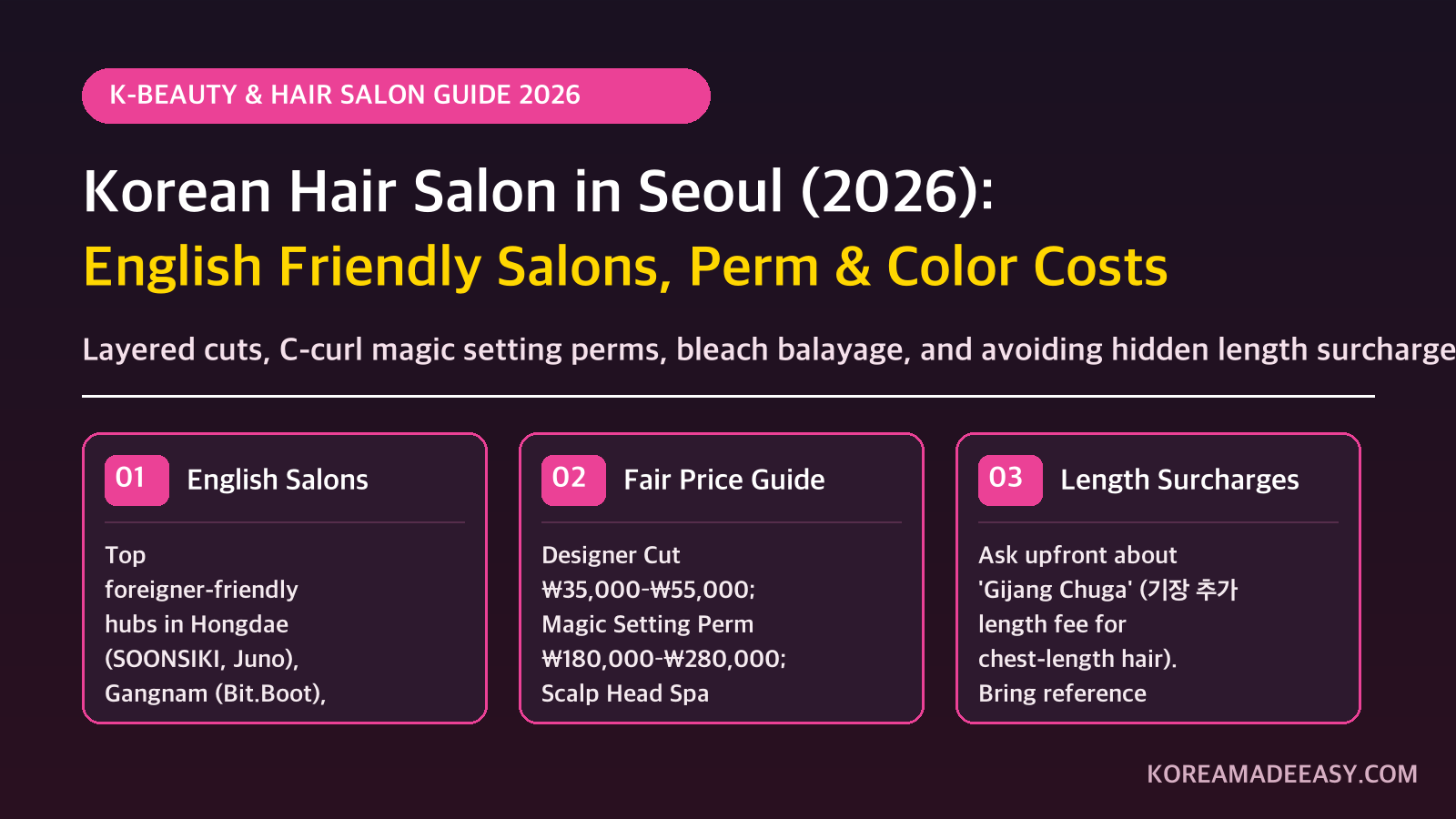
Korean Hair Salon in Seoul (2026): How to Book, Perm & Color Price Checks